Sunday, February 27, 2005

Human Rights And Indifference

indonesia-migrants-deported
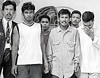
The delayed mass expulsion of undocumented migrant workers from Malaysia is due to begin next week. This time there seems little hope of an amnesty or a further extension. Both the Indonesian and Philippine governments are
urging the Malaysian authorities to ensure there are no human rights abuses when the massive operation starts. Their fears are well-founded. If official statements are to be believed then a hard line approach seems likely. The Immigration director, Ishak Mohamed, is reported as saying that no one would be spared and the authorities will even resort to raiding the homes of those involved. There is almost no debate in the mainstream media. The potential abuses are all too obvious – and hardly anyone seems to give a damn. Sometimes this is a very ugly society. It's the kind of campaign that Peter Benenson would have relished.

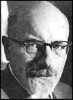
Peter Benenson, 1921-2005

peter-benenson
The founder of Amnesty International, Peter Benenson, has died. There are two appreciations by Antony Barnett in today's Observer, the paper where Benenson first articulated the need for a human rights organisation:

Open your newspaper any day of the week and you will find a report from somewhere in the world of someone being imprisoned, tortured or executed because his opinions or religion are unacceptable to his government. The newspaper reader feels a sickening sense of impotence. Yet if these feelings of disgust all over the world could be united into common action, something effective could be done.
Benenson was a principled and doughty fighter for justice. He had this to say about the symbolism of the candle which became Amnesty's signature:

I have lit this candle, in the words of Shakespeare, 'against oblivion' – so that the forgotten prisoners should always be remembered. We work in Amnesty against oblivion.
And this:

When I first lit the Amnesty candle, I had in mind the old Chinese proverb: 'Better light a candle than curse the darkness'.

Favourite Composers

beethoven
It's about time to make the hard choices for Norm's latest poll
– "top classical composers of all time". I've already offered a long list of eleven here so now I have to get serious. In coming to a final decision I've been guided by my experiences and joys both of listening and playing (piano and violin in a previous life). Somehow there's no place for Mozart, Schubert, Chopin, Debussy, Bartók and Stravinsky. So here goes, in ranking order and with some brief notes:
  • Ludwig van Beethoven (1770-1827). The towering genius of classical music – an extraordinary visionary living through a revolutionary age that is reflected in the music. Must listen: Late String Quartets, Piano Sonata Op. 106 (Hammerklavier), Symphony No. 7.
  • Jean Sibelius (1865-1957). He bridged nineteenth-century romanticism and the new classicism with their austere and dark textures. The seven symphonies are simply astounding. Must listen: Symphonies No. 5 and No. 6.
  • Johann Sebastian Bach (1685-1750). His output embraced almost every musical genre of his time and opened up new dimensions of technical and artistic complexity. Must listen: Goldberg Variations and Sonatas and Partitas for Violin.
  • Dmitri Shostakovich (1906-1975). He tried to reconcile the musical revolutions of his time and give voice to revolutionary socialism. Must listen: Symphony no. 13 (Babi Yar) and String Quartets.
  • Claudio Monteverdi (1567-1643). He made the breakthrough in harmonic form and wrote in a multiplicity of styles from secular madrigals to opera. Must listen: Vespers of 1610 and Orfeo.

Observing The Blogosphere

observer-frontpage
Today The Observer
officially launches its own blog – the not very catchily titled The Observer Blog. Some posts have already been up for a while and the site looks promising. It's nicely designed and, as you'd expect, well written. The oldest British newspaper and the first to launch a blog – somehow appropriate. Welcome to the argument. (via: Norm)

Saturday, February 26, 2005

Before Sunset

before-sunset
It's taken me a while to catch up with the review of Before Sunset which we screened more than a week ago as part of our "Love Is In The Air" mini-season. Richard Linklater has crafted a beautifully observed, charming and intelligent film. But much credit must also go to its two stars – Ethan Hawke (Jesse) and Julie Delpy (Céline) – not only for their subtle acting but also for their contribution to the realisation of the script. The storyline is well known. In Linklater's earlier film, Before Sunrise, the two lovers met briefly and capriciously in Vienna nine years ago. They agreed to rendezvous in six months' time in a promise of undying celebration of what they had discovered of each other. In the new film, we learn that they never made it, that circumstances got in the way, and that a great love was perhaps forever abandoned. Or is it?

Before Sunset traces the rediscovery of love in a different key. Obviously both characters are older and have experienced life's vicissitudes. Jesse is a famous writer on a book promotion tour, locked into an unhappy marriage but with a deeply-loved son, and an attitude of weary cynicism toward the world. Céline has kept much of her youthful idealism and works as an environmental campaigner but also suffers a (pseudo)relationship with an often absent boyfriend. Both have much more of life's experiences under their belts but these have also been lives of pain and disappointment. Jesse admits that he has written his autobiographical novel of the earlier encounter precisely in the hope of seeing Céline and perhaps of un-breaking his heart. The new story – shot entirely in real time and carried only by the intense conversation, laughter, gestures and silences of the couple as they meander through the streets of Paris – is a journey toward a single realisation: that in their adult lives they have never experienced anything like that single night of passion long ago. It is hard to say whether this knowledge thrills or horrifies them. But the journey's the thing: a very human effort at transcending that moment from the past.

Hawke and Delpy play out their rediscovery beautifully. Before Sunset is a daring piece of filmmaking but there is no artifice, no recourse to the usual romantic tricks. It is a study in the art of intelligent conversation and the slow stripping away of aching truths. More than anything it is a dialogue about everything that matters: work, romantic love, sex, memory, commitment, compromise, anger, disappointment and, of course, the passage of time. By the end, they have learned to walk by each other's side; neither is leading or following. Jesse deliberately misses his plane home. We can only guess at what happens next. We'll have to wait for another sequel to find out ... perhaps in another ten years or so.

When my friend, Wan, recommended that we screen Before Sunset he said that its themes reminded him of me. I'll leave that to another to decide.

Footnote: I don't care much for either the razzmatazz or conservatism of the Oscars. But Julie Delpy should have been a contender .... In any case, as Richard Linklater has said, Before Sunset is a kind of "anti-Hollywood romance".

Aronson On Deutscher

isaac-deutscher
There's a long, brilliant and contentious essay by Ronald Aronson here on Issac Deutscher's Trotksy triology, one of the seminal books of the twentieth century. Deutscher famously concluded his study with the hope that Marxism could shed itself of the "contradiction in terms" that was the one-party state. Here's Deutscher:

... a Marxism cleansed of barbarous accretions [would encourage] struggle against bureaucratic privilege, the inertia of Stalinism, and the dead-weight of monolithic dogma.
Aronson is much less sure. He points to the fundamental failings of all forms of vanguardism and his tone is rather too pessimistic for my taste. At the same time – and with a good deal of perspicacity – he bemoans the weakness of the socialist Left today and its evacuation from a principled, egalitarian politics:

The twenty-first-century world is still driven by the capitalist system's revolutionary dynamism; its main problem is the absence of any significant counterweight. While there is resistance to "globalization" and American hegemony today, it no longer comes principally from the socialist left but – violently, hellishly and uncomprehendingly – from radical Islamists and other fanatics fired by dreams of an imaginary past rather than visions of an egalitarian future.
Some of the so-called Left want to make common cause with these fanatics. Shedding illusions is surely the beginning of understanding. Read the rest.

Friday, February 25, 2005

The Air We Breathe

KLTower-Haze
Kuala Lumpur is completely shrouded in smoky haze. I can hardly see my neighbours. The brilliant tropical light and its primary colours have disappeared and everything now is an inpenetrable monochrome. The air is acrid and it's hard to breathe. It's unbearably hot.


The immediate cause is straightforward. There's been very little rain for more than a month, and forest and peat fires are burning across six states, including Selangor which surrounds the capital. Here, more that 2,000 hectares have been ablaze for more than ten days. It's all made worse by the levels of car exhaust emissions and increased use of air-conditioning. There are reports here, here, here and here. Singapore and Sumatra are also affected. The longer term causes are more deeply-rooted: partly the result of unsustainable levels of pollution that blight so many Southeast Asian cities and partly a consequence of the draining of the peatlands. If anyone doubts that human foolishness is to blame then you should be in Kuala Lumpur today. And it's not due to rain properly for another month ...

Frida Kahlo Portraits

frida-kahlo
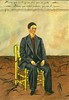
Following up on my earlier review of the film
Frida, there is a small selection of Frida Kahlo's surrealist self-portraits in today's Guardian. They're taken from the Tate Modern's summer exhibition which will run from June. I'll have to get over and take a look.

Thursday, February 24, 2005

Photographs Of Asia

Penang-1890
There is a fascinating set of photographs here
of nineteenth century Asia. They're from an exhibition at the Museum of Asian Art in Florida. Like the famous photographs of Native Americans in the same period, these Asian images are very much a product of colonial expansion and the desire to record what was often in the process of being brutally destroyed. Nonetheless they are a singular historical record. Here I reproduce a photograph of Penang around 1890. Its shophouse frontages are still there today.

(Via wood s lot)

Reclaiming Asia For Global History

I've just been sent an interesting essay by Wang Hui, an historian of ideas and chief editor of Dushu (Beijing). It's based on a talk he gave at the LSE last year. In it he discusses nineteenth-century Orientalist conceptions of Asia as well as two competing projects of Asian modernity: the Japanese imperial notion of the Greater East Asia Co-prosperity sphere and the socialist conception of Asia based on national liberation movements. He points, correctly in my view, to the ambiguities and contradictions in each of these competing projects. This opens up an interesting set of conclusions, especially about the potential to overcome narrow nationalism:
The keys to transcend or overcome such derivativeness, ambiguity and inconsistency can be discovered only in the specific historical relations that gave rise to them.
...


The criticism of Euro-centrism should not seek to confirm Asia-centrism but rather to eliminate the self-centred, exclusivist, expansionist logic of dominance. We will not be able to understand the significance of Asian modernity if we forget the historical conditions and movements .... In this sense, new Asian visions need to surpass the goals and projects of 20th-century national liberation and socialist movements. Under current historical circumstances, they must explore and reflect on the unaccomplished historical projects of these movements. The aim is not to create a new cold war but to end forever the old one and its derivative forms; it is not to reconstruct the colonial relationship but to eliminate its remnants and stop new colonising possibilities from emerging.
Read the rest.

Where Monsoons Meet No.8

Being a miscellany of recent stories from Southeast Asia (a little later than usual).
  • East Timor. The UN peace mission to East Timor is supposed to come to an end in May. But this is a turbulent time in the brief history of the fledgling country. The war crimes tribunal that was set up to try those suspected of killings when the Indonesian military and their militias went on the rampage is due to be concluded. Altogether some 75 people have been jailed for these terrible crimes. But none of the major military commanders has been brought to trial. This includes the notorious General Wiranto, despite being found "morally responsible" for the events of 1999 by a government-sponsored human rights inquiry. The decision to wind up the tribunal is a sad reflection of the realities of power politics. East Timor's foreign minister, Jose Ramos Horta, says that the political priority now is to build bridges with the new government in Jakarta. Ramos Horta compares East Timor with Jonathan Swift's Lilliput:
    East Timor is not going to be the Lilliputian judge, which is going to bring to justice very powerful Indonesian ministers. If we are seen by Indonesia as conniving with the international community to continue to embarrass Indonesia, it could have a backlash against East Timor.
    Instead a new judicial process has been agreed – a Truth and Friendship Commission – modelled on similar efforts as those in South Africa. There are numerous outstanding problems that need to be resolved during this crucial transition. For example, there are signs that the UN-sponsored criminal justice system is not working very effectively and is mired in corruption and incompetence. Some political parties oppose the new establishment of the new Commission and want a more confrontational stance which Ramos Horta fears will upset the still-delicate relationship with Jakarta. More seriously still, there is the real possibility that the new Commission will run into the same problems with truth-telling that have been experienced elsewhere. In this context, as Norm once forcefully argued, the truth disappears and there can therefore be no justice:
    The victims and protesters of any putative injustice are deprived of their last and often best weapon, that of telling what really happened. They can only tell their story, which is something else. Morally and politically, therefore, anything goes.
    Of course it is hoped that this is not what transpires. But the portents are not good. For all its problems the war crimes tribunal had a specificity of prosecution and a regard for admissable evidence that a generic Truth Commission cannot hope to possess. Meanwhile, Kofi Annan is said to be in favour of a scaled-down UN peacekeeping presence after May. If that's the case let's hope that the UN does a better job than it has hitherto. And let's hope, too, that good neighbourliness does not eclipse justice.
  • Burma. The hardening of the Burmese military junta continues apace - with barely a comment from the international media. In danger of stating the bleeding obvious, this week the UN representative to Burma, Razali Ismail (who is a Malaysian), said the State Peace and Development Council (SPDC) is not taking the mediation efforts of the UN seriously. Razli does not even know when he will be allowed to return to the country. This is a blow to the long-held Malaysian position of so-called "constructive engagement" with the goons. Under Mahathir this was always a rather self-serving position. Today the junta shows what it really thinks of it. Sources in Kuala Lumpur's diplomatic missions have told me that, privately, Razli is absolutely livid with the junta and at the loss of his own dignity. Meanwhile, high level officials from the International Labour Organisation who went to Rangoon to discuss widespread forced labour practices left the country the next day. Forced labour is the accumulation regime favoured by military officers. The junta's top brass simply refused to meet with the ILO delegation. When will this wretched state of affairs end?
  • Indonesia-Aceh. There does seem to have been some progress in the Helsinki talks between the Indonesian government and the Free Ache Movement (GAM), reported here, here and here. Martti Ahtisaari, of the Crisis Management Initiative, which is sponsoring the talks, says that
    Discussions were carried out in a constructive manner. Both delegations engaged in a substantive dialogue in an attempt to identify common ground. It was agreed that this process should be continued.
    Among the key issues discussed were "special autonomy" versus self-government; amnesty (again); security arrangements; monitoring of the implementation of the commitments; and a timetable for action.
    President Susilo Bambang Yudhoyono is saying publicaly that he wants a peaceful solution to the separatist conflict. For its part, the GAM is offering a more cautious note: "we never close doors on a possible negotiated settlement". I just hope that the Indonesian military commanders on the ground are listening.

Wednesday, February 23, 2005

New Directions In The Migration Debate

migrant_workers
There is an important contribution to the ongoing debate - if it can be dignified as such - over the position of migrant workers in Malaysia. It's from Aliran (which means "flow" in Bahasa), one of the most important social movements for justice, freedom and solidarity in the country. I want to quote in full from its recently issued statement
on the exploitation of migrant workers and call for a radical rethink on migration policy. Its central message should resonate elsewhere.
Aliran is befuddled by the Malaysian government's policy on migrant workers. On the one hand, it wants to send back all undocumented migrant workers. On the other, it would like to open up even more sectors of the workforce to migrant workers.

Let us be clear that this opening up is not a sign of "liberalisation", indicating a more enlightened attitude towards migrant workers. Neither is it motivated by a desire to help poorer countries in the region by providing employment to their citizens.

Instead, this new policy appears to be motivated solely by a desire to serve Malaysian corporate and business interests. By opening up even more sectors to migrant workers, the government is allowing corporate and business interests to make even more profits on the back of cheap, easily exploited and vulnerable migrant labour. Many of these migrant workers are denied the basic rights due to them as workers. They even have to surrender their passports to their employers and are not encouraged to join trade unions. At the first sign of discontent among the migrant workers due to exploitative working conditions and lower-than-promised wages, they are quickly packed off home.

Apart from the exploited migrant workers, the ones who will be hurt the most are Malaysian workers, especially the Malaysian poor. This new policy will encourage more migrant workers - whether they are legal or undocumented migrant workers - and further depress the wages of semi-skilled and unskilled Malaysian workers. Many Malaysian factory operators, restaurant waiters, cleaners and garbage collectors will suffer. They could even be laid off as employers resort to contract labour - usually made up of lowly paid and exploitable migrant workers - to save costs.

A thorough revamp is needed in our policy towards migrant workers. There is nothing wrong in hiring migrant workers, but they must be paid the same wages as their Malaysian counterparts and should enjoy all the basic rights due to a worker - including the right to join trade unions and to engage in collective bargaining. Let us not be regarded as a nation that exploits cheap migrant labour at the expense of low-income Malaysian workers to fuel our economic growth.

Eclipse At Patravadi Theatre

Eclipse
On Saturday, my friend Chatchie took me to the wonderful Patravadi Theatre in the centre of Bangkok. Just getting there was a journey in itself: crossing the majestic Chao Phraya River by ferry while the pilot dodged the oncoming river traffic; and a stroll through the mazy tumult, smell and colour of a market in one of Bangkok's oldest neighbourhoods. And then suddenly another world altogether: a quiet, narrow lane; a low wall decorated with murals of dancers; the distant sound of a pianist playing jazz standards; and the shady embrace of an urban garden. Welcome to the Patravadi Theatre, one of Bangkok's hidden jewels. It's a modest complex of workshops, studios, galleries, a cafe, a shop and a magnificent open-air playhouse.

In Thailand, the name Patravadi is synonymous with the performing arts. Named for its founder - the incomparable stage performer, scriptwriter and theatre director, Patravadi Mejudhon - the theatre has been perhaps the most important centre for both classical and innovative, contemporary performing arts for more than a dozen years. It is the hybrid of traditional and modernist styles that is Patravadi's hallmark.

We were there to watch Eclipse, a unique piece of music-dance theatre. The story explores the deep meaning of Buddhist teachings on the causes of suffering by showing people's reactions to an eclipse of the sun. In traditional Thai thought the prevailing view was that during an eclipse an evil spirit was eating the sun. So as soon as an eclipse appeared everyone would rush out into the open to beat dreams, bang on pots, shoot off guns and make as much noise as possible to drive away the evil spirit. In this production, the players use the sound of drums to signify the awakening of courage and strength, as a symbol of the fight against fear, ignorance and prejudice. The story is about the path to enlightenment - a Buddhist version of the struggle to overcome suffering by understanding its causes. By transposing its themes, or reading them through secular lenses,
the play was remarkably powerful even for a non-believer like me. If you're ever in this part of the world you should pay your respects to the creative work being done at the Patravadi Theatre.

Tuesday, February 22, 2005

In Praise of Joesoef Isak

Joesoef-Isak
Yesterday Norm posted on this on the Indonesian publishing house Hasta Mitra which has just issued a new translation of Karl Marx's Das Kapital. It's a small indication of the political opening that has occurred in the days since the fall of Suharto and even, I think, of a modest revival of the Indonesian Left. Lest it be forgotten Indonesia has one of the longest traditions of radical politics in Southeast Asia and in 1965, when Suharto seized power with the help of his friends in the CIA, the third largest Communist party in the world.

Norm's post prompted me to say something more about the remarkable Joesoef Isak who directs Hasta Mitra.
Before he was jailed in 1965 Joesoef was chief editor of the daily newspaper Merdeka (Independence) and secretary-general of the Asia-Africa Journalists Association, a direct product of the seminal Bandung Conference that heralded the eventual birth of the Non-Aligned Movement. Joesoef was never brought to trial or charged and was only released after ten years. One of his fellow prisoner was Pramoedya Ananta Toer, one of the great novelists of the twentieth century. The two have been close friends for the last five decades.

In April 1980, Joesoef launched Hasta Mitra along with Pramoedya and the newspaper publisher Hasjim Rahman. In classical Javanese Hasta Mitra means "Friendly Hand". Their first titles were Pramoedya's masterpiece of Indonesian nationalism, the Buru Quartet – This Earth Of Mankind, Child Of All Nations, Footsteps and House Of Glass – all of which were banned by Suharto.

For the next seventeen years, Hasta Mitra was widely recognised as
emblem of alternative Indonesian opinion to the New Order regime and the focal point of potential socio-political re-grouping. Since the fall of Suharto's regime in 1998, Hasta Mitra has made a huge effort to reclaim modern Indonesian history from the lies and evasions of the New Order. And behind all of this was the remarkable figure of Joesoef.

Happily, last year his efforts received due internatonal recognition with the award of the
Jeri Laber International Freedom to Publish Award presented by the Association of American Publishers to a publisher "who has demonstrated courage and fortitude in the face of political persecution and restrictions on freedom of expression". There is no more deserving recipient.

Rites Of Passage

Nur-Kelantan
Hunting a seal – training as a geisha – enduring circumcision – reading the Torah – learning military obedience – plucking eyebrows – reciting the Qu'ran – learning the fascist salute. What's the connection? You can find out here.

Monday, February 21, 2005

Agony Of Toil In Indonesia

Smoky Mountain-Manila
A couple of months ago I posted on the fact that the high death tolls from typhoons in the Philippines were in great measure attributable to man-made causes - in that case, the irresponsible antics of logging companies. Now two stories from Indonesia reinforce the point.

It is reported here and here that a massive case of timber smuggling has been uncovered in the eastern province of Papua. The smuggling is organised by criminal syndicates and the destination of the timber is China, the largest buyer of illegal timber in the world. The discovery is due to the investigations and campaigning of two non-governmental organisations - the Indonesian environmental group Telapak (Bahasa only) and the London-based Environment Investigation Agency who have just published a joint report called "The Final Frontier". To nobody's surprise the report implicates high-ranking Indonesian military officers, government officials and law enforcers in the illegal operations. As always, it is the poor who are getting ripped off. The solution is simple. Here is M. Yayat Afianto of Telapak
Papua has become the main illegal logging hotspot in Indonesia. The communities of Papua are paid a pittance for trees taken from their land, while timber dealers in Jakarta, Singapore and Hong Komg are banking huge profits. This massive timber theft of Indonesia's last pristine forests has got to be stopped.
At least the new president seems to be willing to look into the matter.

And then there is news of the latest tragedy reported here, here, here and here. Heavy rain in western Java has triggered landslides and it is feared that over 150 people have been killed. They were nearly all living near a massive rubbish dump which collapsed, dislodging tons of earth and rubble. These communities are the human scavengers who literally eke out a living from the discarded waste of the better-off.

Last year Mike Davis wrote a powerful piece in the New Left Review on the rise and rise of the Third World's post-industrial mega-cities, home for a billion-strong global proletariat ejected from the formal economy. The opening sentence of Mike's essay has an eerie prescience:
Sometime in the next year, a woman will give birth in the Lagos slum of Ajegunle, a young man will flee his village in west Java for the bright lights of Jakarta, or a farmer will move his impoverished family into one of Lima's innumerable pueblos jovenes.
Well, the latest tragedy didn't take place in Jakarta itself but just a few kilometres away. But you get the point. Today I wonder too about the young Nigerian woman and the Peruvian farmer and his family.

Of course the two stories of maldevelopment are linked - as the stories of the poor always are - by the infernal logic of greed and immiseration. How did Marx put it?
Accumulation of wealth at one pole is, therefore, at the same time accumulation of misery, agony of toil, slavery, ignorance, brutality, moral degradation, at the opposite pole.
For all the peans to "development" in China or the road to "recovery" in post-Suharto Indonesia, the reality is that this is attained only by the agony of toil of the wretched of the earth. How long will it be before the rural communities of Papua, denuded of their ecological patrimony, became the new scavengers in the "planet of slums"?

Malcolm X

malcolm-x
Forty years ago today Malcolm X was murdered - gunned down at a political rally in Harlem. His life was remarkable and is well told
here and here. The most important aspect was not his transformation from an impoverished and victimised childhood through self-education nor his struggles with more mainstream, middle class civil rights leaders or increasingly deadly disputes with the Nation of Islam demagogue
Elijah Muhammad. Those were necessary stages in his evolution from marginalised anger to inchoate rebellion. The real legacy, it seems to me, lies in Malcolm's political conversion near the end of his life and how it speaks of an informed radicalism. Basically the shift was from self-help and racial autonomy to a wider understanding of the connectedness of the struggles against the ruling class, both in America and beyond. This is the mature Malcolm speaking a year before his death:
We are living in an era of revolution, and the revolt of the American Negro is part of the rebellion against oppression and colonialism which has characterized this era .... It is incorrect to classify the revolt of the Negro as simply a racial conflict of Black against white, or as a purely American problem. Rather, we are today seeing a global rebellion of the oppressed against the oppressor, the exploited against the exploiter.
Malcolm X has been greatly misunderstood - reviled by many and turned into an icon by others. But his life, his experiences and his politics tell us something of what John Simon calls "human possibility" in bleak times.

"There Is No Happiness Without A Longing For Justice"

John-Berger
Over at Charlotte Street, Mark points us to a recent essay by John Berger at OpenDemocracy's debate on "Visions and Reflections". As nearly always with Berger's writing he pens a meditation of terrible beauty. Ostensibly it's an essay on the poor and their lives hidden from view by the walls of the rich. He intersperses his own words with quotations from the
Russian writer, Andrei Platonov. This is how Berger begins:
The poor have no residence. They have homes because they remember mothers or grandfathers or an aunt who brought them up. A residence is a fortress, not a story; it keeps the wild at bay. A residence needs walls. Nearly everyone among the poor dreams of a small residence, like dreaming of rest. However great the congestion, the poor live in the open, where they improvise, not residences, but places for themselves. These places are as much protagonists as their occupants; the places have their own lives to live and do not, like residences, wait on others. The poor live with the wind, with dampness, flying dust, silence, unbearable noise (sometimes with both; yes, that’s possible!) with ants, with large animals, with smells coming from the earth, rats, smoke, rain, vibrations from elsewhere, rumours, nightfall, and with each other. Between the inhabitants and these presences there are no clear marking lines. Inextricably confounded, they together make up the place’s life.
But more than merely a catalogue of the deprivations suffered by poor people, Berger offers a deeply moral warning against the nihilism of "human cowardice" in the face of poverty. And as a form of everyday resistance he celebrates the worth of storytelling amongst the poor:

The secret of storytelling amongst the poor is the conviction that stories are told so that they may be listened to elsewhere, where somebody, or perhaps a legion of people, know better than the storyteller or the story’s protagonists, what life means. The powerful can’t tell stories: boasts are the opposite of stories, and any story however mild has to be fearless and the powerful today live nervously.

A story refers life to an alternative and more final judge who is far away. Maybe the judge is located in the future, or in the past that is still attentive, or maybe somewhere over the hill, where the day’s luck has changed (the poor have to refer often to bad or good luck) so that the last have become first.

Story-time (the time within a story) is not linear. The living and the dead meet as listeners and judges within this time, and the greater the number of listeners felt to be there, the more intimate the story becomes to each listener. Stories are one way of sharing the belief that justice is imminent. And for such a belief, children, women and men will fight at a given moment with astounding ferocity. This is why tyrants fear storytelling: all stories somehow refer to the story of their fall.

Read the rest.

Sunday, February 20, 2005

Missing But Not Forgotten

KhaoSan+Tsunami
Khao San Road is the heart of Bangkok's backpacker district. I've always thought of it as a pretty hedonistic kind of place populated by "trustafarians" (among Urban Dictionary's definitions: "one who lives with poorer people in an attempt to gain credibility, or street-cred, while disguising the trust fund they actually live off"). But Khao San Road is also the site of a moving tribute to those lost to the earthquake-tsunami catastrophe that hit Thailand's islands so badly. Taped to metal railings are hundreds of simple A4 leaflets with photographs and bare details of some of those who are still missing nearly two months on. The photographs are of Thais and non-Thais alike. Mostly they are unaffected holiday snaps; occasionally there is a candid shot of a dead person; and sometimes photographs of whole families who have disappeared.
A horrible fate - a force of nature - is suddenly embodied in these images of specific people, places, and an indelible event. Together they are a memorial collage for the dead.

All photographs are an expression of absence and the absence of the missing is final.

According to the official Thai agency seeking information about the victims of the tsunami the whereabouts of
4,234 persons remains unresolved.

Thaksin's Strong-arm Tactics

thaksin
It was useful to be in Thailand and get a first-hand sense of just what the prime minister, Thaksin Shinawatra, is up to in the south of the country. On Wednesday he announced the drastic step of denying funds to villages whose administrations are believed to be sympathetic to Muslim separatists. More than 300 villages and areas deemed to be in the category have been labelled "red zones". Meanwhile villages in the so-called "green zone" - obedient to the military authorities - will be rewarded with money. The measures are reminiscent of the anti-communist offensive pursued by military in the 1970s and 1980s and consistent with Thaksin's own brand of authoritarianism. His strategic thinking is chilling:
If the money sanctions do not work, I will send soldiers to lay siege to the red zone villages and put more pressure on them. I will never allow anyone to separate even one square inch from this country, even though this land will have to be soaked with blood.
For someone who has just won a landslide election Thaksin has had to face a surprising barrage of criticism which may point to the robustness of Thai democracy. The Nation's editorial on Friday said that his ideas were "half-baked" and "simplistic". It didn't mince its words:
The prime minister's crude approach is tantamount to treating Thai Muslims of Malay descent like circus animals, rewarding the obedient ones with food while cracking the whip at the wayward ones as punishment. But Thaksin needs to be told by his advisers or handlers that such silly, childish games will not only never work out as planned, but will also create a stumbling block that could exacerbate the already worsening situation in the deep South.
Today's press is suggesting that there is a strong possibility of a legal challenge to the zoning policy. The National Human Commissioner, Pradit Charoenthaithawee, is saying that
[t]he policy is discrimination. It violates human rights and is unconstitutional.
Meanwhile, academic critics are highlighting some of the likely consequences if Thaksin goes ahead:
The policy is cruel and will indirectly kill people. Not only it does not solve the problem, it will escalate violence in the South.
And one of the country's leading commentators, Sopon Onkgara, is likening Thaksin's measures to those of a CEO (the prime minister's preferred moniker) who is set on "liquidating" those villages he considers to be serious "liabilities". Even former military leaders have labelled the strong-arm tactics as imprudent.
The weight and cogency of opposition to Thaksin is significant and calls on arguments both of principle and prudence. But he is unlikely to listen. Sopon's conclusion is a bleak one:
As of now, nobody is in a position to put an end to the crisis in the South, just as no one is in a position to prevent Thaksin from floating more bad policies, decisions and actions.
The chances of even contemplating a cessation to the vicious cycle of terrorist and military violence has taken a big step backwards.

Friday, February 18, 2005

Away In Thailand

I'll be in Bangkok for a couple of days so they will be no posting. Back in business on Monday. Expect some updates on the worsening situation in Thailand's southern provinces where both Thaksin and the bombers are turning up the heat.

Thursday, February 17, 2005

Frida

frida+kahlo
The movie biography is a tricky genre. When the subject of the film is an artist then the difficulties are multiplied. All too often, the life of creative endeavour and its psychological inspiration seem to elude the conventions of filmmaking. Even well-made and well-acted biopics tend toward the dutiful and dull. The film critic, A.O. Scott, once put it this way: "we are usually treated to the superficial pageantry of the artist's career - sex and politics, drinking and fighting, celebrity and ruin". But the inner magic of the life too often evaporates. I think that
Frida, which was the latest in our international film screenings, largely overcomes these limits. Having watched it many times my affection for the film has actually grown; I like the film enormously. In time it will come to have a greater reputation than some of the initial desultory reviews suggested.

Part of the problem Frida faced on release was the overwhelming baggage of expectation. Obviously, this has much to do with the life and work of film's subject, the great Mexican surrealist painter Frida Kahlo. By the 1980s Kahlo had become more, much more, than simply a wonderful artist who lived through the most turbulent decades of Mexico's history. She had transmogrified - literally - into an icon for every imaginable heterodoxy: a poster girl for bohemianism, a bearer of proto-feminist consciousness, a martyr of suffering, a pop culture legend. These are all valid, if partial, readings of the life and the art. But somehow with Kahlo the reverential iconography came to overwhelm the life and this does not make for a promising biography.

The second burden lay in the making of the film itself. It is now well-known that Frida's star and producer, Salma Hayek, had to fight tooth-and-nail during her seven-year quest to keep hold of a project that was passionately close to her heart. There was a fearful moment when it seemed likely that Madonna (cashing in her dubious credentials for having played the execrable Evita) would get the role. Hayek has said this about her own tenacity:
This was a story that was important for me to tell. It was not just making the movie, it was about making the right movie.
No little part of this desire was driven by a powerful sense of Mexican pride:
I think it's a story that shows Mexico in a light that it has never been seen in before. At this particular period of time that Frida lived and was there, Mexico was the nucleus for a lot of sophisticated minds. And I really wanted to show this part of my country and this extraordinary woman who inspired me because of her courage to be unique always in everything she did.
And then there was a barely-hidden condescension towards Hayek's own acting capabilities. I think this is a badly misplaced view: while it's true that she has been in some pretty mediocre Holywood fare her earlier work in independent Mexican cinema demonstrated a considerable presence and charisma. More than most, she's been a victim of some lousy material.

Hayek's - and director Julie Taymor's - film generally works well in a difficult genre. It is not an unalloyed triumph or even a great film. But it consistently offers us a sensitive rendition of the core motifs of Kahlo's tempestuous and anarchic life and a transcendent insight into the agony of suffering that produced the art. The story of Kahlo's life is so well-known that it barely needs repeating. In the film her youthful and headstrong obsessions - intoxicated by art, sex and left-wing politics - are nicely captured in small vignettes that establish the heartbeat of the mature woman. But her life was forever changed by two accidents. The first was the streetcar accident in which her back and pelvis were horribly injured and, as Kahlo wryly observes, she "lost her virginity". That central scene is shot with a very powerful, almost hallucinatory intensity. From that defining moment, Kahlo's journey becomes one of self-discovery and self-realisation as an artist. It is a journey dominated (but never overshadowed) by her entanglement with the muralist, Diego Rivera, the second great "accident" of her life.

Through the charismatic characterisation of both Hayek and the bear-like Alfred Molina (who plays Rivera) the film captures the underlying magnetism that brought them together and, somehow, kept them together even through betrayal: the passion for unorthodox left-wing politics, professional artistic respect, and unrdiled sexual attraction. It's a relationship built on abiding loyalty if not fidelity. And it's a heady combination that never falls into triteness or predictability. It's as well that Hayek and Molina are so compelling because some of the other characters (Trotsky, Breton, Rockefeller) are only thinly realised.

Though the raw materials of Kahlo and Rivera's lives would be sufficient to raise the bio-pic way beyond the dutiful, the most interesting aspect of the film is the innovative way that Taymor deals with the art. Kahlo was no realist and neither is Taymor. The narrative is interpolated with wonderful animated sequences - including a Dadaist King Kong scene - that not only (literally) give life to some of the most important paintings but make subtle links to the abiding influences of Mexican folk traditions - fearful dancing skeletons, broken body parts - that so obsessed Kahlo. It is precisely when the film takes these kinds of creative risks - when it moves away from dutiful storytelling to capturing the moods and sensations that marked the life - that it works best: the vital bursts of colour, the glorious music and the over-the-top theatricality mark out
Frida from the run-of-the mill. Hayek and Taymor have made the "right film". See it if you can.

Wednesday, February 16, 2005

Living With Fear

My friend Meds, over at Blinking Senses, has this short piece on living with fear in Manila in the days after the latest terrorist bombings.
When I got off the bus and started walking down the pavement, I saw people walking fast as usual, hurrying their way to work, but I know deep inside, they're like me, scared as hell but just have to move on, just have to earn a little more courage to face whatever it takes to live.
And there are those who actually defend these murderers .... Keep your courage, Meds.

Weird Wired World

Hamza
There are some seriously weird stories out there, some of them masquerading as news.

From Australia come this - high quality paper is being made from kangaroo manure. Of course there's the perennial problem of supply chains: "
We are hoping the community will help by collecting poo for us and dropping it off in plastic bags. New or old, we'll take it all", said the manager of Creative Paper Tasmania (sic). The inspiration? Paper made from elephant dunk and elk poo ... of course.

Also
from the BBC (good to see the license fee being put to good use) under this immortal link: "Nigerian is fined for dressing as a woman to sell love potion". Abubakar Hamza, aka Fatima Kawaji, used his female identity to sell herbal aphrodisiacs to women in the conservative Islamic city of Kano. He "appeared in court dressed in a pink kaftan and matching cap, said he was now 'a reformed man'". So what on earth did his pre-reformation get-up look like?

Finally, this one tickled me because my new MA programme (ASEAN Studies since you ask) is coming up for consideration by Senate next week.
You can boldly go where no other philosophy student has gone before in Georgetown University's "Philosophy and Star Trek" course, where students discuss the nature of time travel, the ability of computers to think and feel, and other philosophical dilemmas facing the crew of the Starship Enterprise. I love this earnest defence of the course in The Georgetown Independent:
Philosophy and Star Trek is a very misunderstood course. There is no better way to convey this than to describe the predictable, ignorant, annoying, and inevitably lame responses I get from some of my fellow students when I tell them I am enrolled in it. After they finish laughing in my face and sharing their horribly unoriginal Star Trek pun with me, I have to explain to them that the course is NOT the same as a Star Trek convention.
(Hat tip: Belyn)

Another Final Deadline (updated)

Following the high-level meeting (reported here and here) between the Malaysian prime minister, Abdullah Badawi, and the Indonesian president, Susilo Bambang Yudhoyono, it has now been decided to extend the deadline for the mass expulsion of undocumented migrant workers. The new date is now set for the beginning of next month. Abdullah's delay reflects the iron fist in the velvet glove that is the hallmark of his administration. On the one hand he claims that the delay is a "soft operation to advise illegals to return home". But he is equally clear about their fate thereafter: "From 1 March we will crack down on the illegals". Remember, "crack down" means vigilantes, jail, whippings and fines. We are still waiting for that rational and humane debate about the future of migrant workers in the country. We may have to wait a long time.

Update:
Amnesty International (Asia-Pacific) has sent this letter to Malaysia's Home Affairs Minister. Its position could not be clearer:
... we appeal to you to halt any deportations until it can be guaranteed that the fundamental human rights of all refugees, asylum-seekers and migrants, including undocumented migrants, will be respected in this process.

Tuesday, February 15, 2005

Galeano On Salgado: 17

salgado-refugees
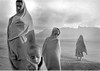
The last of the series from Eduardo Galeano's "Salgado, 17 Times":
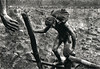
17. Caravans of pilgrims wander the African desert, dying, searching futilely for a blade of grass, an insect to eat. Are they people or mummies that move? Are they walking statues, disfigured by the wind, in the last throes or asleep, perhaps alive, perhaps dead, perhaps at once dead and alive?

A man carries his son or bones that were his son in his arms and that man is a tree, rigid and tall, rooted in the solitude. Rooted in the solitude, an amazing tree caresses the air, swaying its long branches, the foliage a head leaning over a shoulder or a breast. A dying child manages to move its hand in a final gesture, the gesture of a caress, and caressing, dies. Is that woman who walks, or drags herself, against the wind a bird with broken wings? Is that scarecrow with arms thrown open in the solitude a woman?

Viva Village Vanguard

Village+Vanguard
Jazz clubs are great places. I've been in a few in my time. Ronnie Scott's in central London was where I cut my teeth, while the wonderful Band On The Wall remains my favourite. I remember sitting a few feet away while Cecil Taylor climbed in, on and all over the house grand. I was devastated to hear that, on New Year's Day, the old place had closed down after thirty years of continuous music-making. Happily, there are plans afoot to renovate the building and open up again as a "Space for Music" in 2007. I'll be making the pigrimage. And for a completely different experience - spacious, chic and sophisticated but still with that certain jazz club feel - there's Tokyo's Blue Note.

That's all by the by. It's time to tip the hat and raise a glass to the grandaddy of all jazz clubs. The estimable Village Vanguard at 178 Seventh Avenue South, New York City, is 70 years-old this week. To celebrate the Vanguard has this roster for the week, starting tonight: Roy Hargrove; Wynton Marsalis; The Bad Plus; Jim Hall; The Heath Brothers and The Bill Charlap Trio. Not bad at all. To get a sense of the history of the place just think of all those great "Live at the Village Vanguard" albums: Bill Evans, Charles Mingus, John Coltrane, Sonny Rollins, Art Pepper, Earl Hines ... the list goes on and there's a great collage of album covers here.

There is also a very warm tribute by Tad Hendrickson here. This is how he describes first impressions:
This former speakeasy is not much to look at from the outside, but as you descend the perilously steep stairs you enter a place of legendary - if not mythic - proportions. A place that every serious jazz fan knows, the intimate 123-capacity room is pie-shaped, with the stage at the point. The walls are filled with pictures of the past legends and present stars that have played there. What adds to the New York City ambience is that guests can hear the 1, 2, 3 and 9 trains that run just feet from the street-side wall.
The Vanguard has been run by the formidable Lorraine Gordon since 1989. She has an old-fashioned philosophy you wouldn't want to mess with:
The people who come here truly love jazz. They know there's no food. No credit cards are accepted. And there has been no smoking for 10 years.
More than this, as Tad Hendrickson puts it, she
can generally be found near the door policing the audience, keeping an eye out for such contraband items as mobile phones, tape recorders and cameras. She will also tell guests dithering about where to sit to find a seat and sit in it.
Some lady.

But it's still the music that counts. It's where today's musicians not only pay homage to the legacy of the Vanguard, but try to create their own niche in that wondrous history. Here's the sax player, Chris Potter, recalling his debut:
The first time I played there was with Red Rodney when I was 20 or so. I was scared to death when I saw Dizzy Gillespie and James Moody sitting in the front row, but the vibe was so positive that soon I felt like I was playing in my own living room.
Long live the Vanguard. One day I'll make my own pilgrimage ...

Next Steps For Dodong

Last week I posted on the retirement of my friend Dodong Nemenzo as President of the University of the Philippines. Despite what must have been an extremely busy schedule he found the time to send me a thank you note. After all the speculation he has now revealed what he plans to do - besides teaching as Professor Emeritus - and that is "to bring together the best brains in UP and in the progressive movement to craft a Blueprint for a Feasible Alternative". Dodong offers this line of impeccable reasoning for someone who has never lost his radical fervour to make a better society:
As a young man filled with revolutionary fervor, I used to enjoy heckling the rich, the high and the mighty. This is all right when the country is doing well and it is necessary to shake people out of complacency. But when the country is in crisis, habitual faultfinding is counterproductive. It promotes cynicism, and there is no greater obstacle to change than cynicism among the people. Cynics do not fight for change, they look for an escape, they emigrate. If we as a people lose faith in our own capacity to create a better future, we can never transcend the current mess. It is time to think of an alternative program, but a feasible one around which the people can rally.
And what about rumours that he might run for public office? The answer is a categorical "no".
I don't have the charm, the money, nor the stomach for electoral politics. Besides, and more importantly, I do not see traditional politics as the path to national salvation.
So the die is cast. The Philippines needs people of Dodong's integrity now more than ever.

Monday, February 14, 2005

Galeano On Salgado: 16

salgado-brazil
From Eduardo Galeano's "Salgado, 17 Times":
16. Hunger lies. It simulates being an insoluble mystery or a vengeance of the gods. Hunger is masked, reality is masked.

Salgado was an economist before he found out he was a photographer. He first came to the Sahel as an economist. There, for the first time, he tried to use the camera's eye to penetrate the skins reality uses to hide itself.

The science of economics had already taught him a great deal about the subject of masks. In economics, what appears to be, never is. Good fortune through numbers has little or nothing to do with the greater good. Let us postulate a country with two inhabitants. That country's per capita income, let us suppose, is $4,000. At first glance, that country would seem to be doing not at all badly. Actually, however, it turns out that one of the inhabitants gets $8,000 and the other zero. Well might the other ask those adept in the occult science of economics: "Where do I collect my per capita income? At which window do they pay?"

Salgado is a Brazilian. How many does the development of Brazil develop? The statistics show spectacular economic growth over the last three decades, particularly through the long years of military dictatorship. In 1960, however, one out of every three Brazilians was malnourished. Today, two out of every three are. There are 16 million abandoned children. Out of every ten children who die, seven are killed by hunger. Brazil is fourth in the world in food exports, fifth in area, and sixth in hunger.

Sunday, February 13, 2005

Galeano On Salgado: 15

salgado-jesus
From Eduardo Galeano's "Salgado, 17 Times":
15. A Way of the Cross with statues of stone. A Way of the Cross with people of flesh and blood. Is that scruffy child wandering the dunes of the desert gentle as Jesus? Does he possess Jesus' anguished beauty? Or is he Jesus on the way to the place where he was born?

Where Monsoons Meet No. 7

Phils-Soldier
Being a miscellany of recent stories from Southeast Asia.

  • Malaysia. The story of Malaysia's threat to expel hundreds of thousands of undocumented migrant workers has taken a new twist. There is a report here about police arresting a number of government officials suspected of selling residency permits to criminals involved in people trafficking. This comes on top of a major worry that unscrupulous employers will further exploit foreign workers by withholding pay during the temporary suspension of the mass deportation order that was due to come into effect at the beginning of the month. The treatment of migrant workers is simply appalling and inhumane. The government threatens them with jail and whipping for overstaying; employers regularly abuse the terms and conditions of work; and the police and immigration officers routinely extort money from them. There should be plenty for the Malaysian prime minister, Abdullah Badawi, and the Indonesian president, Susilo Bambang Yudhoyono, to talk about tomorrow.
  • Philippines. The fighting that erupted on Monday in the southern island of Jolo continues and is the heaviest in conflict-ridden Mindanao for years. The battle pitches the Philippine military against separatists from the Abu Sayyaf and a splinter group of the Moro National Liberation Front (MNLF) who follow the jailed leader Nur Misuari. Already, the BBC is reporting more than 90 deaths from both sides while the Philippine press is estimating that there are more than 16,000 refugees. Local politicians say that there have been many civilian casualities. The rhetoric of both sides is couched in fairly apocalyptic tones. The military is claiming that the separatists "are taking a last stand in the mountains". For their part, a Misuari ally counters that the separatists "do not like to surrender, they will fight to the death". Unfortunately, the latter scenario is the more likely. But when the smoke of the battlefield has cleared and the body bags have been filled the political destiny of the Moro people in Mindanao will be as unresolved as ever. And the immediate fear? An excuse for martial law.
  • Indonesia-Aceh. The Jakarta Post is carrying testimonies of survivors of December's earthquake-tsunami catastrophe. They point to the long-term psychological trauma that many people are suffering as a result of deeply-felt loss. Here is the voice of Ratnawati, who lost her husband and two children in the tsunami and no longer has hopes or dreams of the future: "I do not know what to do any more. I want to join my husband and children. I do not know what I should live the rest of my life for because I have nobody". The pain is stark. We can only hope that Ratnawati, and hundreds of thousands like her, rediscover the reason to live. And I can only hope that we - you and I - can remember the value of solidarity.

Arthur Miller, 1915-2005

arthur miller
There has been so much written about Arthur Miller over the last couple of days that it seems a little superfluous to add anything else. I have seen his three greatest plays -
Death Of A Salesman, The Crucible and A View From The Bridge - in various productions over the years. They are some of the finest dramatic writing of the contemporary theatre. In his mature plays, Miller was able to combine a devastating scalpel - able to dissect the psychological complexities of his protagonists - with a broad brush sensitivity to the wider dilemmas of social responsibility and community. He was also a great figure of moral conscience, having been politicised into the Left as a result of his family's experiences of the Depression and later by his principled opposition to the McCarthyite witchhunts of the 1950s that became the inspiration for The Crucible. "Most human enterprise disappoints", Miller once said. But his life and his work were wonderful triumphs.

There are tributes and obituaries all over the place but I was especially struck by those offered by Philip French and Michael Ratcliffe, while The Guardian did this profile eighteen months ago.

Bernard Stone, 1924-2005

I've just heard of the recent death of Bernard Stone, the bookseller and publisher. During the 1980s I often used to drop into his bookshop on Floral Street in Covent Garden and I remember him as a kindly man, full of funny anecdotes. There is a warm obituary of him here.

Saturday, February 12, 2005

Galeano On Salgado: 14

salgado-camp
From Eduardo Galeano's "Salgado, 17 Times":
14. The Third World the "other" world worthy only of contempt or pity. In the interest of good taste, not often mentioned.

Had AIDS not spread beyond Africa, the new plague would have gone unnoticed. It hardly would have mattered if thousands or millions of Africans had died of AIDS. That isn't news. In what is known as the Third World, death from plague is a "natural" death.

If Salman Rushdie had stayed in India and written his novels in Hindustani, Tamil, or Bengali, his death sentence would have attracted no attention. In the countries of Latin America, for example, several writers have been condemned to death and executed by recent military dictatorships. The European countries recalled their ambassadors from Iran in a gesture of indignation and protest against Rushdie's death sentence, but when the Latin American writers were sentenced and executed the European countries did not recall their ambassadors. And the reason they were not recalled was because their ambassadors were busy selling arms to the murderers. In the Third World, death by bullets is a "natural" death.

From the standpoint of the great communications media that uncommunicate humanity, the Third World is peopled by third class inhabitants distinguishable from animals only by their ability to walk on two legs. Theirs are problems of nature not of history: hunger, pestilence, violence are in the natural order of things.

The Malaysian Way Of Death

The character of Malaysian politics has been the subject of a rather moribund debate for some time now. Some analysts, mostly liberal economists, simply turn a blind eye to the deep flaws in the country's political system, preferring instead to concentrate on the superficial indicators of developmental "success". In doing so, they present the virtues of "order" and "stability" (and the concomitant curtailment of political rights) as the price worth paying for the so-called economic miracle. Others, mostly liberal political scientists, offer mild criticisms of a system that is usually described as "semi-authoritarian", "semi-democratic" or "quasi-democratic" lacking, as they see it, a mature system of government and democratic institutions, an independent judiciary, and an unfettered role for the media. The obvious prescription here is that political elites should do more to craft these institutional forms and thus embed the requirements for liberal democracy.

What both these approaches fail to see are the coercions - the very real brutality - that lie at the heart of the Malaysian state apparatus. It is true that the electoral system is strongly skewed in favour of the ruling parties; it is true that independent media outlets hardly exist; it is true that there is no real separation of political powers. But it is equally true that there is an unremitting harshness in the state apparatus that gets only passing commentary in mainstream analysis. I have already posted a great deal on the treatment of migrant workers which seems to exemplify some of this harshness.

Last week two official parliamentary answers offered a new insight into just how bad things are. They are reported by Malaysiakini (one of the few independent political voices) here and here (subscription required). In a written reply to the parliamentary opposition leader, the prime minister, Abdullah Badawi, admitted that there had been more the 1,700 deaths in prison and police custody in the past 15 years. The figures for the past three years have been the worst on record. Among the major causes of death have been a range of preventible illnesses; in addition, a large number of detainees have died from "unspecified" illnesses and suicides. The figures reflect a callous disregard for the well-being of detainees - "shocking" in the words of the opposition - and say a great deal about the lack of accountability and integrity in the prison and police services.

The second official parliamentary answer focused on the vexed question of judicial executions. The government has executed 358 people by hanging in the past 24 years. Such figures have rarely been published and media attempts to establish the number in recent years have been consistently rebuffed. But now we know the scale of the issue. Most disturbing of all are the twelve executions under the provisions of the notorious Internal Security Act (ISA) - a hangover of British anti-communist policy - all in the period between 1984 and 1993 when the former prime minister, Mahathir Mohamad, was establishing his iron grip over the political system.

Compared to neighbouring countries the figures for deaths in detention and state executions might appear "not too bad". But they demonstrate the reality of a hegemonic political system that relies equally on consent and coercion. There are camapigns under way to repeal the ISA and the beginnings of a debate about ending the death penalty. They deserve your support.

Getting Everything Wrong

My friend Erik Reinert of The Other Canon has just sent me a draft of his latest paper which examines, to use his own words, "the curse of standard textbook economics in the Third World". He has a neat and telling way of summarising the surreal world of orthodox development economists. Their project, he says, is the constant search for the panacea which in addition to neoclassical economics would set free the magic of the market. And here is how their litany has evolved over the last decade or so:
  • "get the prices right"
  • "get the property rights right"
  • "get the institutions right"
  • "get the governance right"
  • "get the competitiveness right"
  • "get the national innovation systems right"
  • "get the entrepreneurship right"
Of course we could always ask the simple first order question: get what right for whom? As Erik notes, all this policy tinkering is based merely on a theoretical fantasy. "None of the sequential focuses on single issues will unleash a magic of factor-price equalization under instant free trade, this never existed in history nor will it ever exist". When are these developmental charlatans going to realise just how much they have got wrong?

Friday, February 11, 2005

Galeano On Salgado: 13

salgado_equa_g
From Eduardo Galeano's "Salgado, 17 Times":
13. Houses like the empty skins of dead animals. The blankets are shrouds and the shrouds dry shells that encase shriveled fruits or deformed beings.

People bearing bundles, bundles bearing people. Bearers scarcely able to walk the mountains, bowed under timbers large as coffins that they carry on their shoulders, becoming part of their shoulders. But they walk on the clouds.

Neo-Nazis In Suits

There are two disturbing reports in today's Guardian here and here about the rise and rise of neo-Nazism in Germany. As I have been reading Philip Roth's The Plot Against America I was especially struck by similarities in the insidious normalisation of far right poison in both the novel and today's Germany.

Luke Harding files a long report on the electoral rise of the
neo-Nazi National Party of Germany (NPD) in Saxony. There are even well-founded fears that the party will have MPs sitting in the Bundestag in 2006. What do these new fascists look like? "The NPD's new MPs don't look like skinheads .... They wear suits; they are in their 30s; and they are impeccably polite". This may be true but the NDP's tactics look frighteningly familiar: intimidatory demonstrations (such as the one planned for Dresden on Sunday) and other forms of violence, notably assaults by individuals and small groups on racially identified scapegoats like Jews or foreign workers, are part of the strategic repertoire of fascism.

As Harding notes, the success of the NPD has caught most mainstream politicians by surprise though why this should be I'm not quite sure. After all, the far right - in Germany and the rest of Europe - has been organising for quite some time now, at least since the early 1980s. For example, racist violence in east Germany reached a highpoint in 1991 in a sustained assault on a refugee and guestworker accommodation block in the Saxon town of Hoyerswerda and, in the following year, over 1,000 rightwing thugs attacked asylum seekers in Rostock over five days of mayhem. Some conservative politicians and commentators are even likening today's situation with the collapsing Weimar Republic in the early 1930s - rising unemployment and a remote, unpopular government in Berlin though I don't think the historical parallels really hold. The frustrations with reunification or economic problems are simply not of the same order as the preconditions that allowed for what Robert Paxton calls the "epoch of fascism" in the 1930s.

Nonetheless, the electoral success of the neo-Nazis is deeply disturbing in its own right. Some political opponents, like the Greens, have decided simply to ignore them.
This is hopeless. Gerhard Schröder's Social Democrat-Green government is considering a ban on the NPD and its far-right sister party, the Deutsche Volksunion (DVU). Some will consider this an illiberal and inappropriate response. I think that this is a necessary but insufficient countermeasure to neo-Nazism at this juncture. It is no time to play softball with the fascists in suits. But relying on the state - even a liberal democratic one run by the centre-left - cannot hide the fact that the state is not a neutral institution. The police in Hoyerswerda and Rostock took action against anti-fascist demonstrators with much greater alacrity than when their task was to stop assaults on foreigners which lasted days. This is not difficult to understand given the racist sympathies of sections of police forces in Germany. The fight against fascism in Germany, as elsewhere, will only be successful if mass anti-fascist movements can be mobilised. In a fascinating review of fascism in Germany - written more than ten years ago - Rick Kuhn says this about the power of confrontation:
Challenged by big counter-demonstrations when they try to march or rally fascists loose several of their most important means of attracting support. The acceptability of their ideas is challenged when large numbers of people publicly demonstrate their hostility. The cultivated image of power, ability to intimidate political opponents and hence the credence for their racist programs fascists seek is deflated when they are unable to dominate the streets.
If the neo-Nazi march on Sunday is not banned then the hope must be for a mass demonstration of outrage. And then the next stage of the struggle against this poison must begin in earnest.

Tsunami Cock-Ups

The response of ordinary people who gave so generously to the earthquake-tsunami catastrophe was exemplary. There are still problems in holding governments to deliver on their aid promises. And there are still ongoing logistical difficulties and coordination bottlenecks especially in war-torn regions such as Aceh. But surely there are also avoidable problems like the one highlighted recent by Pharmaciens Sans Frontières. In a recent report headed "Tons of inappropriate medicines in South East Asia", PSD tells of the absurdity of stockpiles of branded medicines that simply cannot be used and, further, in a region that produces much of the world's generic medicines:
... tons of medicines of all brands, from all countries, with package leaflets in languages unknown to the medical staff and too short shelf lives are stockpiled in warehouses and also in houses. In the city of Banda Aceh alone, a football field-size warehouse would not be sufficient to concentrate on a single site all the donations brought by different people and organizations and then left there for they are not needed. Even emergency health kits arrived in too large numbers and are no longer appropriate to the situation. And medicines continue to come in! The governments of the affected countries do not dare to refuse them for fear of offending donors.
PSF lays the blame quarely on the lack of preparedness and the foolish repetition of mistakes from earlier humanitarian disasters:
... the same mistakes are systematically made and the "need to help" comes before the "real needs" of recipient countries. Some may say "it is normal, we had to act fast". "That is not normal" Pharmaciens Sans Frontières replies, and wonders why governmental, inter-governmental and non-governmental humanitarian actors do not immediately meet in order to be effective and avoid penalizing the recipient countries with inappropriate donations, that they will have to destroy to protect the health of their people. In the age of communication, why is it so difficult to communicate?
As a result, much of PSF's work has been reduced to that of medicine "garbage collector". There are very clear international guidelines in place from the World Health Organisation. To put it no more strongly, all donors should adhere to them.

(Via: Black Triangle)

The Definitive Motown Story

marvin+gaye
I've already sent off my order for this. That's
the first of 12 volumes of CDs that, when complete, will form a definitive anthology of every single issued by Motown between 1959 and 1972. What a project! There's a fulsome review in today Guardian by Richard Williams. Here he is on that distinctive sound:
... that driving backbeat, a whipcrack synthesis of snare drum, tambourine and (the secret ingredient completing the magic formula) the downstroke of a plectrum across a set of heavy-gauge strings attached to a Fender Telecaster.
And there is an interesting line about the jazz inflections of the early Motown musicians:
When Marvin Gaye sings the standard ballad The Masquerade Is Over in the style of Nat King Cole, for example, his entrance is preceded by a piano introduction borrowed from Thelonious Monk's Round Midnight, hinting at the jazz orientation of Motown's session musicians.
It only goes to show what I was getting at here.

Thursday, February 10, 2005

Galeano On Salgado: 12

salgado+war
From Eduardo Galeano's "Salgado, 17 Times":
12. I have spent five minutes searching for words as I gaze at a blank sheet of paper. In those five minutes, the world spent ten million dollars on armaments and one hundred and sixty children starved to death or died of curable illness. That is to say, during my five minutes of reflection, the world spent ten million dollars on armaments in order that one hundred and sixty children could be murdered with utter impunity in the war of wars, the most silent, the most undeclared war, the war that goes by the name of peace.

Bodies out of concentration camps. Auschwitzes of hunger. A system for purification of the species? Aimed at the "inferior races" (which reproduce like rabbits), starvation is used instead of gas chambers. And for the same price, a method of population control. The epoch of peace by fear was ushered in with the atom bombs at Hiroshima and Nagasaki. For want of world wars, starvation checks population explosion. Meanwhile, new bombs police the hungry. A human being can die only once, as far as we know, but the number of nuclear bombs currently stockpiled provides the option of killing everyone twelve times.

Sick with the plague of death, this world that eradicates the hungry instead of hunger produces food enough for all of humanity and more. Yet, some die of starvation and others of overeating. To guarantee that the usurpation of bread shall endure, there are twenty five times as many soldiers as doctors in the world. Since 1980, the poor countries have increased military spending while expenditures for public health were cut back by half.

An African economist, Davison Budhoo, resigned from the International Monetary Fund. In his farewell letter he wrote: "There has been too much blood, as you know. It runs in rivers. It has befouled me completely. I sometimes feel that there isn't soap enough in the world to wash away what I have done in your name".

Jimmy Smith, 1925-2005

Jimmy Smith
The Hammond B3 organ and Jimmy Smith. Two names that simply live side-by-side in jazz. Yesterday Jimmy Smith died. To say that he revolutionised the jazz sound is an understatement. In establishing his reputation in the late 1950s Smith's bands
often did away with a bassist, playing the basslines himself with his feet literally walking on the organ pedals: organ-guitar-drums became his classic line-up, working principally alongside Donald Bailey and Kenny Burrell, as well as the sax player Stanley Turrentine. In creating his infectious music Smith became a one-man soloist and rhythm section, his vocabulary consistently traced back to the churning 12-bar blues. Some of his great albums are from the 1960s - especially The Sermon! and Back At The Chicken Shack. But he was still playing, still on the road and still recording. I particularly like his sardonic Dot Com Blues (2001). And a new album with his protegé, Joey DeFrancesco, is due out from Concord next week.

There are obituaries here, here, and here. And there is a nice memoir from the time Blue Note's Francis Wolff and his partner, Alfred Lion, first encountered Jimmy Smith:

I first heard Jimmy at Small's Paradise in January 1956. It was his first gig in New York. He was a stunning sight. A man in convulsions, face contorted, crouched over in apparent agony, his fingers flying, his foot dancing over the pedals. The air was filled with waves of sound I had never heard before. The noise was shattering. A few people sat around, puzzled, but impressed. He came off the stand, smiling, the sweat dripping all over him. "So what do you think?" "Yeah!" I said. That’s all I could say. Alfred Lion had already made up his mind. When he heard a good thing - that was enough.
(via Norm)

Wednesday, February 09, 2005

Galeano On Salgado: 11

salgado+terra
From Eduardo Galeano's "Salgado, 17 Times":
11. Eyes of a child looking on death, not wanting to see it, unable to look away. Eyes riveted on death, snared by death, death that has come to take those eyes and that child. Chronicle of a crime.

A Tribute To Dodong Nemenzo

dodong
Today is the last day in office of a great man: Francisco Nemenzo, universally known as Dodong. He is retiring from his post as president of the University of the Philippines, the country's top university. He has served the University in many different capacities for more than forty years, primarily as a wonderful teacher of politics but also as someone committed to the necessary tasks of institution-building at a time when the very ethos of UP - as a secular, progressive, publicly-funded place of learning and scholarship - has been under attack from many quarters. He has skillfully met all these challenges and taken UP into the new century in robust health. His legacy will be enduring.


I have known Dodong for a number of years and I owe him a great deal. There is an official tribute to him - in video format - at the UP website. It gives a sense of the public man and the testimonies are warm and unaffected, in keeping with his character. And there is a lovely piece on him from Bonn, as one of his inspired students, over at A Good Game. But I want to offer here a less formal set of reminiscences - both personal and political - that I have culled from conversations usually propelled by drinking whisky and listening to jazz (two of his passions, modestly indulged).

Dodong did his postgraduate studies at the University of Manchester in the early 1960s as a result of a political accident. As with most Filipino students in those days he had applied to study in the United States but was turned down for a visa because of his political views - he was already a committed Marxist bent on revitalising the moribund Left politics. He has some lovely stories of his time in Manchester - stories still fresh in the memory and told with an infectious chuckle: the cold rooms in Whalley Range and Salford he shared with Princess that were heated by a single-bar electric fire; his encounters with students committed to the CPGB as well as those who were already forming the "New Left"; his passion for the English school of Marxist historians - Hobsbawm, Hill, Thompson - which never left him; the music bar on Brazenose Street where he first heard four relatively unknown lads from Liverpool; and the birth of his son, named for Fidel Castro, in St. Mary's Hospital.

After his return to the Philippines Dodong was inevitably drawn into the labyrinthine world of Philippine Left politics. With all modesty, he recalls his years on the run from Marcos's thugs and his eventual imprisonment. And after the return to democracy in 1986 he struggled to rebuild the chronically divided Left, helping to found BISIG [
Bukluran sa Ikauunlad ng Sosyalistang Isip at Gawa] as a non-sectarian, participatory socialist party, often organising in the face of bitter hostility from the dogmatic Stalinists of the Communist Party of the Philippines.

And all the while Dodong fought, with clarity and no little courage, his natural enemies from the self-appointed elite of Filipino politics who returned to power with alacrity after Marcos's fall. This predatory elite has indulged in the usual red-baiting while actively trying to undermine his much-needed reforms of UP. I remember one story which must have been excruciating for him. Dodong was invited to Malacañang in 2001 by the new president, Gloria Macagapal Arroyo, the latest incarnation of what Ben Anderson once called "cacique democracy". Arroyo then deliberately spoke across Dodong to the man sitting next to him for two hours, rendering him silent, a humiliation he accepted with stoicism. His exemplary response was to successfully redouble his efforts to defend UP's rights against a government bent on eroding its funding and commodifying higher education. And he did it in his well-trusted way: by mobilising the huge well-spring of support for his humane vision of education.

I once asked Dodong what he would do next. As I expected, his mind was full of fresh and fertile ideas: the possibility of a visiting fellowship at the University of Havana to give himself the time to research the remarkable parallels in the political histories of Cuba and the Philippines; the establishment of a leftwing think tank in order to create a space for young socialists to thrash out new ideas and strategies; and many more. Last week he sent me a present - a bottle of best Filipino tapuy (rice wine). I'll be raising a glass to Dodong tonight - not just to a past well lived but to a future to be struggled for.

Another Norm Poll

shostakovich
He's at it again. And the dust from the "back-breaking, eye-straining, time-consuming" great rock 'n' roll poll has barely settled. I'm talking about Norm, of course. He's just launched his latest - he now wants to know your top five classical composers of all time. And - cheeky one this - he wants you to rank them in order. In a startling change of tactics Norm has revealed his choices at the outset and it's a list with a strong feel for German romanticism. The closing date is: Sunday 6 March.

For what it's worth here is my long list of eleven (think cricket) in chronological, not ranking, order.
  • Monteverdi
  • Bach
  • Mozart
  • Beethoven
  • Schubert
  • Chopin
  • Debussy
  • Sibelius
  • Bartók
  • Stravinsky
  • Shostakovich

Renewed Fighting In Mindanao

The unfinished challenges of nation-building and the creation of (multi)national identities remain some of the major political problems throughout Southeast Asia. Religious, regional and ethnic tensions persist in every major country in the region. The fundamental issue posed by minority groups is that they strive to defend their own visions of community and 'nation' against national visions and state systems proposed by the central authorities. These state systems have practised systematic forms of authoritarian internal colonialism. This is certainly true of Mindanao which has been subjected to the dual policy of exploitative neglect and subjugation from Manila for centuries.

The renewal of bloody fighting in Jolo - reported here, here and here - comes as no great surprise. In a feature common to much of the factionalism and micro-politics of separatist struggles there are two groups involved:
rebels loyal to the separatist leader Nur Misuari who used to head the Moro National Liberation Front (MNLF) which signed a peace treaty with the Philippine government in 1996; and an armed Muslim group Abu Sayyaf - an allegedly al-Qaeda linked organisation - which is also has ties with the Misuari faction.

Misuari became governor of a Muslim autonomous region until he was replaced in 2001. He was arrested four years ago and has been held at a police camp near Manila ever since after leading a failed revolt in Jolo to protest against his sacking. T
his has continued to be a major source of resentment among his loyalists. For its part, Abu Sayyaf is better understood not as a ideologically-driven group of Islamists but a bunch of kidnappers and extortionists who compete with corrupt local politicians in a turf war for control of the string of islands that stretch from Mindanao down to Sabah. Religion or the rule of the righteous have very little to do with it.

Meanwhile, successive governments in Manila and the influential, corrupt Philippine military pursue a dead-end policy of all out war.

There are some hopeful signs. Next month the leaders of the main separatist movement, the
Moro Islamic Liberation Front (MILF), will resume talks with the government here in Kuala Lumpur. These are the most serious efforts yet to come to a viable solution to this intractable problem. The MILF has already tactically conceded a great deal to get this far. The ball is in Manila's court.

Gong Xi Fa Chai

year+cock
Happy Chinese New Year to everyone! Forward to the Year of the Cock.

Tuesday, February 08, 2005

Galeano On Salgado: 10

Salgado+4
From Eduardo Galeano's "Salgado, 17 Times":
10. Reality speaks a language of symbols. Each part is a metaphor of the whole. In Salgado's photographs, the symbols disclose themselves from the inside to the outside. The artist does not extract the symbols from his head, to generously offer them to reality, requiring that they be used. Rather, reality selects the precise moment that speaks most perfectly for it: Salgado's camera denudes it, tears it from time and makes it into image, and the image makes itself symbol a symbol of our time and our world. These faces that scream without opening their mouths are "other" faces no longer. No longer, for they have ceased being conveniently strange and distant, innocuous excuses for charity that eases guilty consciences. We are all those dead, going back centuries or millennia, who nevertheless remain stubbornly alive alive down to their profoundest and most painful radiance, who are not pretending to be alive for a photograph.

These images that seem torn from the pages of the Old Testament are actually portraits of the human condition in the twentieth century, symbols of our one world, which is not a First, a Third, or a Twentieth World. From their mighty silence, these images, these portraits, question the hypocritical frontiers that safeguard the bourgeois order and protect its right to power and inheritance.

Lords Of Misrule

Two recent books demonstrate the depravities of market fundamentalism in our times and the predatory role of consultants who cream off enormous sums of money without actually doing much - or rather in doing a great deal of damage. Taken together they highlight, from insiders' perspectives, just how totalising the power and systemic unity of contemporary capitalism really is. Neither book offers any cogent solution to the problems they highlight but they both tell us a great deal about precisely what is wrong.

The first is Lucian Bebchuk and Jesse M. Fried's Pay Without Performance: The Unfulfilled Promise of Executive Compensation. The authors provide a detailed and disturbing account of US senior corporate managers' influence over their own pay. None of this, of course, is new. But Bebchuk and Fried offer some fine evidence of just how greedy these people are and just how pathetically weak corporate governance mechanisms are. Here are some nuggets from the annals of America's corporate scandal.
In 1997, Delta Air Lines awarded Ronald Allen, its retiring chief executive, a $3.5m seven-year consulting contract. What did Delta expect in return? That he "perform his consulting services at such times, and in such places, and for such periods as will result in the least inconvenience to him".

By contrast, the conditions AOL Time Warner imposed on Gerald Levin when he stepped down as chief executive were draconian. In return for an annual fee of $1m, Mr Levin had to provide the company with five days consulting a month.

When Jacques Nasser was sacked by Ford in 2001, the company gave him one free car a year, as well as the option of buying more at discount. All that for someone with a pension of $1.27m a year.
Not only are these levels of "remuneration" obscene neither do they conform to the supposed management nostrums of "good corporate governance", "transparency" or "performance".

Those mantras have, of course, been at the forefront of the World Bank discourse on development for more than a decade now. And the role of consultant economists who peddle these lies is the subject of Peter Griffiths's
The Economist's Tale: A Consultant Encounters Hunger and the World Bank. In it Griffiths offers an honest account of what really happens when the World Bank imposes its policies on a country, in this case war-torn Sierra Leone. In his own words, it is
the story of how the World Bank, obsessed with the free market, imposed a secret agreement, banning all government food imports and subsidies. The collapsing economy meant that the private sector would not import. Famine loomed. No ministry or state marketing organization could reverse the agreement. It had to be a top-level government decision: whether Sierra Leone could afford to annoy World Bank officials.
And consultant economists - "
third-rate students from first-rate universities" - are the lubricants of this machine of maldevelopment, propagating the hypocrisy of good governance while bleeding the poor of developing countries dry. In the words of Crooked Timber (who has an excellent post on the book and an extended essay by Griffiths) it is the modern story of development or "how economists kill people". Read the rest.

Monday, February 07, 2005

Amitav Ghosh's Tsunami Stories

Amitav Ghosh
It has now been more than six week since the earthquake-tsunami struck this part of the world. Unsurprisngly, most of the headlines have moved on to other stories - the curse of presentism. But the long, long struggle to reclaim livelihoods and dignity amidst the wreckage goes on as before.

I have only just come across this series of essays by the celebrated Indian novelist Amitav Ghosh. In January he went to the Andaman and Nicobar Islands just after the devastation and wrote three articles about what he found there. They have now been published in The Hindu. In Part One, Overlapping Faults, he points to the semi-colonial relationship of the Islands to India in order to give a sense of the logistical difficulties faced by those responding to the catastrophe:
... as with many colonies, they represent a distended and compressed version of the mother country, in its weaknesses and strengths, its aspirations and failings. Over the last two weeks, both the fault lines that underlie the islands seem suddenly to have been set in motion: it is as if the hurried history of an emergent nation had collided here with the deep time of geology.
In Part Two, No Aid Needed, he stumbles across a man whom he calls just The Director, who was looking for survivors from his family. Ghosh offers this account of how The Director heard of the loss of his family:
He learnt from his son that the family had been in the bedroom when the earthquake started. A short while later, a terrifying sound from the direction of the sea had driven the three of them into the drawing room. The boy had kept running, right into the kitchen. The house was built of wood, on a cement foundation. When the wave hit, the house dissolved into splinters and the boy was carried away as if on a wind. Flailing his arms, he managed to take hold of something that seemed to be fixed to the earth. Through wave after wave he managed to keep his grip. When the water receded he saw that he was holding on to the only upright structure within a radius of several hundred metres: of the township there was nothing left but a deep crust of wreckage. "And your mother and sister?" the Director had asked. "Baba they just disappeared...". And now for the first time, the boy began to cry, and the Director's heart broke because he knew his son was crying because he thought he would be scolded and blamed for what had happened.
And in Part Three, The Town By The Sea, Ghosh and the Director find nothing but rubble, the detritus of a life; no survivors, except for the Director's son. Ghosh ends his essay with this tribute to the spirit of the Director:
There are times when words seem futile, and to no one more so than a writer. At these moments it seems that nothing is of value other than to act and to intervene in the course of events: to think, to reflect, to write seem trivial and wasteful. But the life of the mind takes many forms and after the day had passed I understood that in the manner of his choosing, the Director had mounted the most singular, the most powerful defence of it that I would ever witness.
Read the rest (via Aliran)

Galeano On Salgado: 9

Salgado Woman
From Eduardo Galeano's "Salgado, 17 Times":
9. This is stripped down art. A naked language that speaks for the naked of the earth. Nothing superfluous in these images, miraculously free of rhetoric, demagogy, belligerence.

Salgado makes no concessions, though it would be easy and, unquestionably, commercially advantageous for him to do so. The profoundest sadness of the universe is expressed without offering consolation, with no sugar coating. In Portuguese, salgado means "salty."

The picturesque, studiously avoided by Salgado, would cushion the violence of his blows and foster the concept of the Third World, as, after all, just "another" world: a dangerous, lurking world but at the same time simpático, a circus of odd little creatures.

Sunday, February 06, 2005

Where Monsoons Meet No. 6

Being a miscellany of recent stories from Southeast Asia.
  • Indonesia-Aceh. A week on from tentative peace talks in Helsinki, the Indonesian government has said that it is willing to meet representatives from the separatist Free Aceh Movement (GAM). According to the FT, the president, Susilo Bambang Yudhoyono, said that he expected a team of ministers to go to Helsinki at the end of February for more talks with exiled GAM leaders: "I have to say to GAM that it is a golden opportunity. I really hope that the GAM side does not miss the window of opportunity because it is time to reunite by adopting special autonomy. We have to continue our talks right now". The conflict has been going on for more than 29 years and Aceh has been under military rule for most of the past 15 years. In the meantime, GAM leaders say they are willing to set aside their demands for complete independence, at least for the time being. This may indeed be an opportunity for change so long as the Indonesian military does not set the agenda.
  • Philippines. The story of the missing billions stolen by the dictator Ferdinand Marcos and his wife, Imelda, has taken a new twist. Despite a US court decision in 1995 awarding the victims of torture, summary killings and disappearances $1.2 billion in damages from the Marcos estate, no money has yet been paid out. In 2003 the Philippine government insisted that any money it recovered from the regime’s coffers - some $683 million - is state property. Recently, a group of more than 9,500 rights victims made a symbolic challenge to the ruling in a US appeals court. Now the appeals court has decided that American courts cannot overturn the sovereign prerogative of the Philippines. This may be good international law but it is bad law as far as the victims of the dictatorship are concerned. The pressure is now on to find new ways to compensate the victims of martial law. Meanwhile, Imedla Marcos is said to be exultant. "Once again, the United States judicial system worked", she said. And to insult to injury, she made the brazen claim that the Marcoses "did not even pinch [kinurot] a human right claimant". The US court decision is demeaning. But Imelda Marcos's sickness is something far, far worse.
  • Thailand. As expected, the Thai Rak Thai party under the incumbent prime minister, Thaksin Shinawatra, secured a landslide victory in today's election. In fact the margin of victory appears to be bigger than predicted with Thaksin gaining enough seats to rule on his own. There are reports here, here, here and here. The election result ends a long tradition of coalition government in Thailand. The opposition Democrats were badly beaten. Their leader, Banyat Bantadtan, has resigned amid fears of what he calls a "parliamentary dictatorship". We can certainly expect four more years of the kind of economic revolution on behalf of domestic capital that Thaksin has so assiduously pursued. (Hat tip: Chatchie)

Galeano On Salgado: 8

Salgado_Miners
From Eduardo Galeano's "Salgado, 17 Times":
8. The miners of Serra Pelada: bodies of clay. More than fifty thousand men in northern Brazil buried in clay, hunting for gold. Loaded with clay they scale the mountain, slipping sometimes and falling, each fallen life no more important than a pebble that falls. A host of miners climbing. Images of the pyramid builders in the days of the Pharaohs? An army of ants'? Ants, lizards'? The miners have lizard skins and lizard eyes. Do the wretched of the earth live in the world's zoo'?

Salgado's camera reaches In to reveal the light of human life with tragic intensity, with sad tenderness. A hand, open, reaches out from nowhere to the miner struggling up the slope, flattened by his burden. The hand, like the hand in Michelangelo's fresco, touching the first man and, in touching, creating him. The miner on his way to the top of Serra Pelada or Golgotha leans, resting, on a cross.

Bob Marley

bob
Today would have been the sixtieth birthday of the great Bob Marley. Hard to believe. He was the first musical superstar from the Third World and sang with fire and eloquence of the hopes, fears and survival of oppressed peoples around the world. Though I love his reggae my favourite tune has to be Redemption Song which he recorded live at his last concert in 1980.
Old pirates yes they rob I
Sold I to the merchant ships
Minutes after they took I from the
Bottom less pit
But my hand was made strong
By the hand of the almighty
We forward in this generation triumphantly
All I ever had is songs of freedom
Won't you help to sing these songs of freedom
Cause all I ever had redemption songs, redemption songs

Emancipate yourselves from mental slavery
None but ourselves can free our minds
Have no fear for atomic energy
Cause none of them can stop the time
How long shall they kill our prophets
While we stand aside and look
Some say it's just a part of it
We've got to fulfill the book

Won't you help to sing, these songs of freedom
Cause all I ever had, redemption songs, redemption songs, redemption songs

Emancipate yourselves from mental slavery
None but ourselves can free our minds
Have no fear for atomic energy
Cause none of them can stop the time
How long shall they kill our prophets
While we stand aside and look
Yes some say it's just part of it
We've got to fulfill the book

Won't you help to sing, these songs of freedom
Cause all I ever had, redemption songs
All I ever had, redemption songs
These songs of freedom, songs of freedom
The BBC has a whole webpage devoted to what it's calling Marley Day and there are many blog tributes including here and here.

Saturday, February 05, 2005

Solidarity

There are two brief sentences - more like aphorisms - that I would like to pick out from Eduardo Galeano's lyrical essay below on the photographs of Sebastião Salgado:
Charity, vertical, humilates. Solidarity, horizontal, helps.
Those six words resonate precisely with what Nelson Mandela said in London the other day:

Overcoming poverty is not a gesture of charity. It is an act of justice.
Exactly how we work out our relationships in the great struggle of transforming the gross inequities of our age - the ways we construct the principles, processes and practices for the common actions of humankind - will have to be based on horizontal solidarities or not at all.

Galeano On Salgado: 7

From Eduardo Galeano's "Salgado, 17 Times":
7. Salgado photographs people. Casual photographers photograph phantoms.

As an article of consumption poverty is a source of morbid pleasure and much money. Poverty is a commodity that fetches a high price on the luxury market.

Consumer society photographers approach but do not enter. In hurried visits to scenes of despair or violence, they climb out of the plane or helicopter, press the shutter release, explode the flash: they shoot and run. They have looked without seeing and their images say nothing. Their cowardly photographs soiled with horror or blood may extract a few crocodile tears, a few coins, a pious word or two from the privileged of the earth, none of which changes the order of their universe. At the sight of the dark skinned wretched, forsaken by God and pissed on by dogs, anybody who is nobody confidentially congratulates himself: life hasn't done too badly by me, in comparison. Hell serves to confirm the virtues of paradise.

Charity, vertical, humilates. Solidarity, horizontal, helps. Salgado photographs from inside, in solidarity. He remained in the Sahel desert for fifteen months when he went there to photograph hunger. He traveled in Latin America for seven years to garner a handful of photographs.

Four More Years Of Thaksin's Revolution

Thais go to the polls tomorrow and the outcome looks a foregone conclusion. There are useful overviews of the election campaign here and here. All indications show that the Thai Rak Thai party of the prime minister, Thaksin Shinawatra, will romp to victory. When Thaksin - who was a billionaire telecommunications mogul before entering politics - came to power in 2001 it was on what many saw as a neo-populist, nationalist platform aimed at small businesses and farmers. He even made promises to curb the pervasive influence of the IMF in the Thai economy. The real significance of that election was that, for the first time, the domestic capitalist class - the local tycoons - took control of the state. Dominated by the interests of big domestic capital Thaksin has begun a fundamental restructuring and reform of Thailand's economy. Whatever the populist claims the Thai Rak Thai government has been one by and for the rich. They seem to have taken to heart Marx and Engels's famous dictum that "[t]he executive of the modern state is but a committee for managing the common affairs of the whole bourgeoisie".

The economic thrust may be new but the methods to maintain political power are familiar: Thaksin has pursued an authoritarian crackdown on political dissent, including extra-judicial killings and the militarisation of the conflict in the Muslim South; he sought to sideline smaller parties in the parliament through mergers and cooptation thus limiting parliamentary scrutiny; he has made moves to check the demands of civil society, including the media, and to impose social discipline on labour. And during the election campaign itself Thaksin has not been shy to use the old standbys of vote buying, personalistic ties and clientelism.

Thaksin's revolution can best be described as "new economics, old politics". He once said that he needed to maintain power for 8 to 16 years to embed his project. And he has been both skilful and ruthless in realigning social forces around a new state project and hegemonic vision. At his final campaign rally, Thaksin offered this pithy insight into his neo-populist, capitalist revolution: "
You have a prime minister who is a capitalist, and so I am good at finding capital for the people". He looks as if he's well on his way to another four years in power.

Friday, February 04, 2005

Galeano On Salgado: 6

From Eduardo Galeano's "Salgado, 17 Times":
6. A little dog stretched out upon his friend's grave. His head high, he keeps vigil over him in his sleep between the lighted candles.

An automobile among ruins, inside it a black woman in a bridal gown looking at a flower made of cloth.

Impossible ships in the midst of the infinite wilderness of sand.

Tunics or banners of sand lashed by the wind.

Cactuses like swords of the earth, armored arms of the earth.

In the factories pipelines that are intestines or voracious boas.

And on the earth, out of the earth, there are peasant feet: feet of earth and time.

House Of Flying Daggers

This week's film in our current international season was Zhang Yimou's House of Flying Daggers. It follows quickly on the heels of the same director's Hero which we screened last month. The new film is a complex martial arts love story. The narrative concerns a secret society, the Flying Daggers, dedicated to overthrowing the collapsing government of the Tang dynasty. Their most accomplished secret agent is Mei, alternately played with luminous grace and burning fercocity by Zhang Ziyi, who is on an assassination mission. She is pursued by two government officers - Leo (Andy Lau) and Jin (Takeshi Kaneshiro) - and as the action unfolds the three are drawn into impostures of double- and triple-crossing. Nothing is quite as it seems. And perhaps that is both the strength and, ultimately, the weakness of the film.

As you'd expect from Zhang House of Flying Daggers is gorgeous to look at. The opening sequence at the high class brothel, the Peony Palace, is simply stunning. The set is magnificent and Mei performs two astonishing dance sequences for Jin and Leo that float seamlessly into the first of a number of exquisitely choregographed fight scenes. The significance of the dances becomes clearer as the love triangle is revealed much later. There are some other fantastic set-piece violent encounters, perhaps the most stunning taking in (and almost destroying) a bamboo forest. Some have complained that all this effort is just so much romantic kitsch but there is a compelling operatic grandeur here that is often breathtaking.

But House of Flying Daggers does not satisfy in the way that Zhang's earlier masterpieces such as Raise the Red Lantern or Ju Dou did. I actually don't think it's as interesting as Hero. That film is equally a visual feast but has much greater moral and political depth. It raises important questions about the nature of unfettered centralised power and the ethic of sacrifice for the greater good. Even if one doesn't agree with Zhang's apparent justification for authority over freedom Hero makes us think about those issues. House of Flying Daggers doesn't. The political thrust is always much less clear and, by the end, has all but disappeared. This leaves us with the complicated love story but even this is, in the final analysis, less than emotionally involving. Symbolically, the final duel between Leo and Jin is remorseless as autumn turns to winter and the driven snow turns blood red. But the love that had produced such ferocity is almost incidental. In the opening dance sequences Mei's face is a painted mask animated by (unseeing) eyes and playful mouth. By the end her face is nothing but a beautiful and empty mask.

There's also a good review of House of Flying Daggers by Michael Brooke over at Mischievous Constructions.

Madiba On Poverty

Just in case there are doubters about the scale of poverty highlighted below - not just in South Africa of course but globally - then listen to the words of the wise old man. He states a simple and profound truth:
Overcoming poverty is not a gesture of charity. It is an act of justice.
He goes on:
[I]n this new century, millions of people in the world's poorest countries remain imprisoned, enslaved, and in chains. They are trapped in the prison of poverty. It is time to set them free.
Nelson Mandela, for that is who it is, was speaking at the launch of
Make Poverty History, which intends to bring together a huge coalition of social forces to persuade rich countries to offer Africa trade justice, debt cancellation and better aid in 2005. It's not an especially radical set of demands but their attainment would immeasurably improve the lives of millions of people. It could just be the start of a major political transformation of the system - global capitalism in its neoliberal form - that imprisons and enslaves people. And as Madiba said ... it's about justice.

Thursday, February 03, 2005

Galeano On Salgado: 5

From Eduardo Galeano's "Salgado, 17 Times":
5. Salgado's photographs, a multiple portrait of human pain, at the same time invite us to celebrate the dignity of humankind. Brutally frank, these images of hunger and suffering are yet respectful and seemly. Having no relation to the tourism of poverty, they do not violate but penetrate the human spirit in order to reveal it. Salgado sometimes shows skeletons, almost corpses, with dignity all that is left to them. They have been stripped of everything but they have dignity. That is the source of their ineffable beauty. This is not a macabre, obscene exhibitionism of poverty. It is a poetry of horror because there is a sense of honor.

In Andalusia I was once told of a very poor fisherman who went about peddling shellfish in a basket. This poor fisherman refused to sell his shellfish to a young gentleman who wanted all of them. He offered to pay the fisherman whatever price he asked, but the fisherman refused to sell for the simple reason that he took a dislike to the young gentleman. And he simply said to him:

"I am the master in my hunger".

What's Going On?

Well they're out at last. The results of Norm's greatest rock 'n' roll songs that is. As you'd expect Norm has an analytical commentary to rival the best. So what are we to make of it all - well at least of the musical tastes of 230 (!) respondents. For the record, here was my list of ten favourites songs in roughly chronological order:
God Bless The Child (Billie Holiday)
Mack The Knife (Ella Fitzgerald)
A Change Is Gonna Come (Sam Cooke)
Four Women (Nina Simone)
Respect (Aretha Franklin)
(Sittin On) The Dock Of The Bay (Otis Redding)
The Partisan (Leonard Cohen)
The Boxer (Simon & Garfunkel)
What's Going On (Marvin Gaye)
The Revolution Will Not Be Televised (Gil Scott-Heron)
And here's Norm's top ten (well eleven actually because of a tie) with votes in brackets:
01 - (I Can't Get No) Satisfaction (The Rolling Stones) [22]
02 - Sympathy For The Devil (The Rolling Stones) [19]
03 - Good Vibrations (The Beach Boys) [17]
04 - Stairway to Heaven (Led Zeppelin) [16]
05= - Like A Rolling Stone (Bob Dylan) [15]
05= - All Along The Watchtower (Jimi Hendrix) [15]
07= - Yesterday (The Beatles) [14]
07= - Born To Run (Bruce Springsteen) [14]
07= - Layla (Derek and the Dominos) [14]
07= - The Weight (The Band) [14]
07= - Won't Get Fooled Again (The Who) [14]
Ummm, let's get this right: precisely none of my choices made the top ten.

So where did they feature in Norm's top not quite 100 (98 actually)? Otis Redding's
(Sittin' on) the Dock of the Bay was sitting uncomfortably at 43=; Aretha Franklin's Respect came in a disrespectful 64=, alongside Simon & Garfunkel's combative The Boxer and Marvin Gaye's unmatched What's Going On (Grapevine did marginally better). Well quite - what is going on? I fully expected Billie and Ella not to feature - great popular songs but too jazzy for the rock 'n' roll canon. But it was sad to see nothing by Sam Cooke, relatively little Motown or r'n'b despite their centrality to modern music including some of those bands who did feature, and no reggae or rap. If Norm can admonish the good voters for the absence of earlier songs (pre-Beatles) then I am going to do the same over black music in general. As he says, go listen to that stuff ...

Wednesday, February 02, 2005

Galeano On Salgado: 4

From Eduardo Galeano's "Salgado, 17 Times":
4. The mouth, not yet dead, fixed to the spout of a pitcher. The pitcher, white, glowing: a breast.

This neck, a child's, a man's, an old man's, rests on someone's hand. The neck not yet dead, but already given up for dead, can no longer sustain the weight of the head.

Drovers In South African Cricket

I have already written a couple of times on the politics of "race" in South African cricket. The thrust of both posts was celebratory. Here I reflected on the Malay cricketing diaspora and its historical niche in South African history. More recently I wrote about Andre Odendaal's fascinating book The Story of an African Game. I used that review to make a couple of points about the state of the game in the country more than a decade on from the ending of official apartheid. Two points are worth restating. At national and provincial levels the sport remains largely white. And I think the general principles behind the United Cricket Board of South Africa's Transformation Charter - as a facilitative mechanism to enable majority representation at all levels - is a worthwhile attempt to overturn entrenched racial discrimination.

I got a number of responses to that post and want to highlight a couple. Norm agreed with what I had to say about "representativity" but was "
not so sure it should apply at the level of the national team". I understand this misgiving though, if handled sensibly, then I do think that the longer-term benefits of wider representation will become clear (though I realise that as in nearly all sports it's today's result that matter). By contrast, Ken takes issue with the entire idea of what he labels "positive discrimination in any form". And he goes on to make an explicit link between what he takes to be the wrongheaded selection of non-white players (it's clear that's who he means even though he doesn't say so) and a more general sense of social wellbeing of the country: "I feel that promoting unmeritorious players to the national team will work against the aims of trying to promote a greater racial harmony in the country - instead only helping to enhance divisions".

I have two responses to this. Though I understand the symbolic significance of sport, not least in the South African context, and the way that it has long been politicised, I think that the promotion of "greater racial harmony" in any generalisable sense depends not one jot on national cricket selection policy. South Africa remains a deeply divided society. For all the undoubted achievements in the extension of political and civil rights to the majority population, underwritten by an exemplary liberal constitution, South Africa remains a deeply divided society. The gap in inter-racial income inequalities - especially between black and white people - remains obscenely wide while inquality within "racial" groups has substantially widened. Poverty and social exclusion remain the norm for the vast majority of people. It is not hyperbole to suggest the existence today of "economic apartheid". I don't see how the selection of non-white players - again no matter what the symbolic significance - will enhance these divisions. White privilege - in society as well as sport - remains a fact of life.

The second, narrower cricketing argument made by Ken turns on his implication that "unmeritorious players" have indeed been promoted to the national team. This is the standard argument and raised a furore when five non-white players were selected for South Africa's 2003 World Cup squad. The usual nonsense came bubbling to the surface: the selection policy was "
apartheid in reverse" (yeah, whatever); or even that the "race" issue had distracted the team and contributed to its abject performance.

I was prompted to look into the substance of the claim - that unmeritorious non-white players were being promoted - by this illuminating piece by Steve Busfield in The Guardian. This is precisely the argument used by Kevin Pietersen to leave South Africa and opt to play for England: "
Pietersen has turned his back on the land of his birth because, he says, non-white players are being given an unfair advantage". Pieterson's mentor, Clive Rice, uses stronger terms: "White players are being driven out of our country in droves". I'm not quite sure how many people constitute a "drove" (or even several "droves") but I am curious about just who the drovers are.

Here are the facts for test match cricket. In recent years only three non-white (I'm using the old racial classification for convenience) players have played more than ten test matches: Herschelle Gibbs, one of the best and most destructive openers in world cricket;
Makhaya Ntini, an aggressive and match-winning fast bowler; and, Paul Adams, the quirky left-arm spinner who's been in and out of the side. Gibbs and Ntini would make any international team except perhaps Australia. Adams's record is marginally better that his rival, Nicky Boje. Indeed, in exactly the same number of matches, Adams has taken more wickets at a better average that Ashley Giles, the stalwart of the England team.

How about other non-white players? Hashim Amla (3 tests) didn't have an auspicious start to his international career but has an excellent domestic record and is still young; Charl Langeveldt (1) made a great debut and was injured in the process and is one of the leading domestic wicket takers; Justin Ontong (2) didn't shine in his two outings but possesses a lot of potential and leadership skills; Robin Peterson (5) made a modest start to his test career but offers some important all-round options; and, Thami Tsolekile (3) showed some guts with the bat and is a competent keeper.

Ummm, that's it. Three proven test players and five younger players who all have decent first class records and have shown varying degrees of promise in their limited test match opportunities. So these are the drovers - the ones unceremoniously shoving Kevin Pietersen out of the way and into the clutches of grateful England selectors. Steve Busfield articulates the reality of South African selection policy in the clearest terms:
A quick glance at the South African cricket team would reveal that most of the team is white, despite the supposedly iniquitous efforts of the new regime. In fact, there is a great deal of dispute about whether there is a quota system in South Africa, or whether there is just an attempt to make small redress for the apartheid past by favouring the non-white player if two cricketers of equal talent are vying for a place in the team.
And that says it all. The Transformation Charter is both a very modest mechanism enabling players who would otherwise be on the margins to compete for places and the selection polcy of the UCBSA should be seen for what it is: a "small redress" for the decades of formal and informal racial discrimination. It is in fact a noble gesture. But if you listen to the ranting of Rice and his ilk you'd think it was the end of civilisation - well, in some ways it is the end of their civilisation and about time too. Greater racial harmony won't come from it because the solution to that problem lies elsewhere. But in the fickle world of sport the drovers may produce another great player and I'm looking forward to that. In the meantime, England supporters should relish Pietersen who will be a cricketing star even while he carries a bagful of cant and prejudice.

Tuesday, February 01, 2005

Galeano On Salgado: 3

From Eduardo Galeano's "Salgado, 17 Times":

3. This world is so sad that the rainbows come out in black and white and so ugly that the vultures fly upside down after the dying. A song is sung in Mexico:

Se va la vida por el agujero
Como la mugre por el lavadero
[Life goes down the drain
Like dirt in the sink]

And in Colombia they say: El costo de la vida sube y sube y el valor de la vida baja y baja. [The more the cost of living goes up the less life is worth.]

But light is a secret buried under the garbage and Salgado's photographs tell us that secret.

The emergence of the image from the waters of the developer, when the light becomes forever fixed in shadow, is a unique moment that detaches itself from time and is transformed into forever. These photographs will live on after their subjects and their author, bearing testimony to the world's naked truth and hidden splendor. Salgado's camera moves about the violent darkness, seeking light, stalking light. Does the light descend from the sky or rise out of us? That instant of trapped light, that gleam in the photographs reveals to us what is unseen, what is seen but unnoticed; an unperceived presence, a powerful absence. It shows us that concealed within the pain of living and the tragedy of dying there is a potent magic, a luminous mystery that redeems the human adventure in the world.

Reasonable And Unreasonable Voices

I have posted a lot about the threat to expel undocumented migrant workers from Malaysia, most recently here and here. And I've bemoaned the lack of a reasoned public discourse on the issue. As in so many countries there is a lot of xenophobic, intolerant crap being spoken. The government knows its on to a populist winner. The BBC has helpfully posted a number of responses to the expulsion policy here (scroll down). Some voices are reasoned and suggest a humane way forward:
The reason why there are so many 'illegals' in Malaysia is due to corruption and lack of job opportunities in their own home country. Malaysia should allow these people to register for a legal status as immigrant workers. Give them work permits, collect income taxes on their earnings etc, this is better than giving them a harsh punishment of deportation back to where it all began. ... After all part of Malaysia's wealth and well being was built on the hard work and determination of these very same people we so easily label as 'illegals'. Come on Malaysia where is your trademark hospitality and kindness?
Or this:
Foreign workers suffer so much hardship and exploitation in order to earn an honest living. They're human too.
But most of the opinion is harsh and unforgiving. There are some familiar prejudices: blaming migrants for rising crime; sponging off the state; government weakness in the face of foreign pressure. But I was most taken by the two British commentators who, on this evidence, should become focus group advisers to Michael Howard.
[i]t's my belief that you can't simply stand idly by and allow foreign immigrants to tear the place up with their own agendas and social woes. Illegal immigration should not be tolerated, and if there are no suitable jobs in the Philippines or Indonesia, then it is up to those countries and their governments to get themselves into gear, and not down to the Malaysians. The UK should watch and learn.

The illegal immigrants can only blame themselves if they stay to face jail, a fine and/or a whipping. Shame the UK government is too yellow-bellied to do the same.

A Delay In The Proceedings

At the last minute, and quite unexpectedly, the Malaysian authorities decided to suspend the controversial threat to expel hundreds of thousands of undocumented migrant workers. This is welcome news even though there is a lot of uncertainty about what happens next.

The circumstances around the volte-face were a bit bizarre, to say the least. And this is unusual for a government that likes to speak with a single, authoritatve voice. The first indication that the expulsion might not go ahead was when unnamed immigration officials in Johor and Malacca claimed to have receieved verbal or SMS instructions not to proceed via their mobile phones. Only later did some kind of official policy statement emerge. The Malaysian Home Affairs Minister,
Azmi Khalid, adopted a conciliatory tone when he told the BBC that officials were only checking documents and advising "illegal" workers to leave:
We are calling it Operation Advice. This is because we've found the response from the illegal workers to be quite good. A lot of them have gone back to their country on their own accord. If the medicine has been effective, why use a stronger one?
But some of Azmi's subordinates don't seem to have been listening too well. According to Mahadi Arshad, director general of Volunteer Corps (Rela), which is involved in the crackdown, the delay was designed simply to enable authorities to identify possible hiding areas before pouncing. The members of the corps, who are ordinary citizens, are supposed to be rewarded 100 ringgit (about £14) for each undocumented migrant arrested.

Part of the reason for the suspension has been the pleas of neighbours for more time to consider the implications of repatriation of so many people. The Indonesian ambassador to Kuala Lumpur, for example, asked specifically for an extension and the Indonesian parliament is asking the President to intervene directly. The Philippine government made a similar request.

The big question, of course, is what happens next. The suspension is unlikely to spark much of a considered debate about how Malaysia might reconsider the whole question of its migration policy though it will give Indonesia and the Philippines some breathing space. For the migrant workers themselves the anxiety over their futures remains. As Irene Fernandez, one of Malaysia's fiercest critics of the ill-treatment of migrant workers says:
"There's something like a dark cloud hanging over migrant workers in Malaysia. There's been a total kind of mismanagement of this whole process".

In Awe Of Batad

I have been fortunate to visit the Cordillera mountains of northern Luzon, Philippines, on three occasions. The last time was in May 2003 with Roli and Christine when we made the lung-pumping trek to Batad. You can get a sense of what we witnessed from this and this. Batad is the site of perhaps the most perfect of the incredible rice terraces across the region - a natural ampitheatre out of which the Ifugao people have literally carved vertical gardens that have been called the "stairways to the heavens". They have created one of the oldest granary cultures anywhere in the world. I remember carrying a bulol, the Ifugao's rice god idol that guards against evil forest spirits, as a present for a friend halfway across Asia. I wonder where it lives now.

These reminiscences are prompted by a "Letter from Philippines" by Tibor Krausz printed in the Guardian Weekly. There are a few infelicities, such as his over-romanticised view of "
traditional communities of a few dozen families shielded from modernity by stern magnificent mountain ranges". Anyone who knows anything about the economy and political ecology of the Cordilleras understands the ways in which "modernity" and capitalist development have penetrated the livelihoods of the Ifugao people. But Krausz is struck by the sheer scale of human endeavour in the same way as I was:
The rice terraces of Northern Luzon in the Philippines are the pyramids of agriculture or the Hanging Gardens of Banaue, if you will. If lined up, Banaue's terraces would outspan the Great Wall of China. And unlike other old wonders of engineering, the terraces are still in the making after two millennia. Employing spades and digging sticks, countless generations of Ifugao farmers have cultivated rice on thousands of paddies hugging mountainsides. Constantly guarding them against natural erosion, they have fortified terraces with packed-earth and loose-stone retaining walls, supporting an elaborate system of dykes.
There is something else here as well. Nearly all the great monuments of Southeast Asian civilisation - Angkor Wat in Cambodia or the Borobudur temple complex in Java or Ayutthaya in Thailand - were the products of centralised states with highly stratified divisions of labour. The Ifugao rice terraces, by contrast, were built and are maintained by very loosely organised
social groups for whom cooperation and the operation of collective kinship obligations are paramount. This observation is not to meant minimise the role of social conflict; blood feuds remain a common means for resolving disputes and social stratification is based on accumulation of rice and the prestige that goes with it. But the cooperative principle drives the exigencies of survival most of the time. In this, as in much else, the people who built the rice terraces in the Cordilleras - with the richness of their indigenous knowledge - have much to teach the development experts and other charlatans of modernisation.